
Psalm 70
5 verses · Brief lament
May all who seek You rejoice and be glad in You; may those who love Your salvation always say, “Let God be magnified!”
Introduction
David, the Urgent Cry, Book 2: The Elohistic Psalter, Poetry, Psalms Overview.
These five verses are David's, and Israel already knew them as the close of an earlier psalm, the fortieth. Here they stand on their own, cut down into a prayer short enough to say in an emergency. The heading marks it for remembrance, which ties it to the part of an offering burned to bring the worshipper before God. Listen for the call for speed at the beginning and the end, and for the room the psalm still makes for others who seek God.
Context
- Who
- Worshippers with no time for a long prayer
- What
- A cry of five verses for God to come quickly, the close of Psalm 40 sung on its own.
- Where
- The sanctuary in Jerusalem, in Israel's public worship.
- When
- The reign of David, about 1010 to 970 BC by the superscription, with no event named.
- Why
- To give a short prayer for a moment of danger when there is no time for a long one.
Historical context
The heading names David and adds a purpose, to cause to remember, which ties the phrase to the memorial portion of the grain offering, the handful of flour and oil with the frankincense burned on the altar. On that reading the psalm is the spoken form of the same act. No event stands behind the psalm and no place is named in it, and the trouble is given in one line of verse 2, men who seek his life and wish him harm. Aha, aha is the noise a crowd makes when a man it dislikes goes down. A first hearer also knew these five verses already, since they stand at the end of Psalm 40 with small differences, so singing them alone meant cutting a known passage down for a service that needed something short.
Significance
This was the prayer for a crisis that left no room for a long one, and it told Israel that the shortest possible words were enough and that speed could be asked for without apology. Even at five verses it made room for other people, because verse 4 asks joy for all who seek God, so the man in danger still prayed for someone besides himself.
This chapter in Jewish lifeWhat this chapter is in Jewish life and reading.
How it is read
Rashi's comment on the heading carries a parable, and it is the best short example of how the classical reading works. The word rendered to make mention he first reads as a word for prayer, on the usage of Psalm 20:8 and 1 Chronicles 16:4. Then he reports what he found in Midrash Psalms at 70:1. A king grew angry with his flock, demolished the sheepcote, and took out both the flock and the shepherd. Later he restored the flock and rebuilt the cote, and left the shepherd unmentioned. The shepherd said, "Behold, the flock is restored and the sheepcote is rebuilt, but I am not mentioned" (Rashi on Psalms 70:1:1). Rashi puts the parable against the end of Psalm 69, where God saves Zion and those who love His name live in it, and reads this psalm as David asking to be remembered too. The rest of his comments are short. The shame of verse 4 returns on the mockers measure for measure, in the very path they walked (Rashi on Psalms 70:4:1 and 70:4:2). Aha is the shout of a man whose wish against his enemy has come true (Rashi on Psalms 70:4:4). Ibn Ezra, Radak, Malbim and Metzudat David all stand in the corpus on this psalm, eighteen comments in all, every one cited by reference alone because Sefaria holds no English version of them. Rashi is quoted here from the Judaica Press complete Tanach with Rashi, translated by A. J. Rosenberg, under CC-BY.
What the rabbis say
The corpus records five places where the Midrash draws on this psalm, and it holds no Talmud locator for the chapter. Midrash Tehillim treats it at 70:1 and 70:2, and cites its verses again at 35:1. Aggadat Bereshit 78:1 reads verses 1 and 2, and Ein Yaakov (Glick Edition), Ketubot 13:17 carries a further citation. The parable of the shepherd above stands in the same Midrash Tehillim at 70:1, which is where Rashi says he found it.
Sources: Rashi, Rashi on Psalms 70:1 to 70:6, the Judaica Press complete Tanach with Rashi, translated by A. J. Rosenberg, CC-BY, 1040 to 1105; Midrash Tehillim, 70:1, 70:2 and 35:1, cited by reference; Aggadat Bereshit, 78:1, cited by reference; The Sefaria corpus, scripts/data/sources/sefaria/psalms/70.json, fetched 2026-09-19, 2026.
Make haste, O God, to deliver me!: Make haste and hurry are both in verse 1, one asking God to deliver and one asking the LORD to help. This psalm repeats Psalm 40:13 to 17 almost word for word, set to stand alone. Haste is all it says.
Psalms 70:1
“Make haste, O God, to deliver me,.... The phrase, "make haste", is supplied from the following clause in Psa 40:13; it is, "be pleased, O Lord", or "Jehovah". The Targum renders it, "to deliver us"; very wrongly; make haste to help me, O Lord; See Gill on Psa 22:19.”
2 more voices on this verseWhat preachers and commentators have said about this verse, in their own words.
Psalms 70:1
“This is the second Psalm which is a repetition of another, the former being Psalm 53, which was a rehearsal of Psalm 14. The present differs from the Fortieth Psalm at the outset, for that begins with, "Be pleased, "and this, in our version, more urgently with, Make haste; or, as in the Hebrew, with an abrupt and broken cry, O God, to deliver me; O Lord, to help me hasten. It is not forbidden us, in hours of dire distress, to ask for speed on God's part in his coming to rescue us.”
Charles Spurgeon · The Treasury of David, Vol. 3 (1872)Particular Baptist
Psalms 70:1
“And so for keeping up continual recollection of God this devotional formula is to be ever set before you. "O God, make speed to save me. O Lord, make haste to help me."This verse has not unreasonably been picked out from the whole of Scripture for this purpose. It embraces all the feelings which can be implanted in human nature, and it can be fitly and satisfactorily adapted to every condition and all assaults.”
John Cassian · written before 435 · CONFERENCE 10:10patristic
Psalms 70:2-3
those who seek my life: Verse 2 asks that those who seek his life be ashamed and confounded, repelled and humiliated. Verse 3 has the enemies retreat in shame, and it quotes their taunt, Aha, aha. Gill reads it as their own shame coming back.
Psalms 70:2
“Let them be ashamed and confounded,.... In Psa 40:14 it is added, "together"; See Gill on Psa 40:14; that seek after my soul; or "life"; in Psa 40:14 it is added, "to destroy it"; for that was the end of their seeking after it; let them be turned backward, &c. See Gill on Psa 40:14.”
1 more voice on this verse
Psalms 70:2
“Here the words, "together, "and, "to destroy it, "which occur in Psalm 40, are omitted: a man in haste uses no more words than are actually necessary. His enemies desired to put his faith to shame, and he eagerly entreats that they may be disappointed, and themselves covered with confusion. It shall certainly be so; if not sooner, yet at that dread day when the wicked shall awake to shame and everlasting contempt.”
Charles Spurgeon · The Treasury of David, Vol. 3 (1872)Particular Baptist
retreat because of their shame: The ones who say Aha, aha are those of verse 2 who seek his life and wish him harm. Charles Spurgeon marks retreat as a milder word than Psalm 40 used. Shame turns them back.
Psalms 70:3
“Let them be turned back for a reward of their shame,.... In Psa 40:15 it is, "let them be desolate"; which seems to respect their land and houses, here their persons; See Gill on Psa 40:15; that say; in Psa 40:15 it is added, "to me"; not to his people, but himself, aha, aha: rejoicing at his calamity and distress. The Targum is, "we are glad, we are glad;'' See Gill on Psa 40:15, and compare with this Eze 25:3.”
Psalms 70:4-5
Verse 4 turns from the enemies to those who seek God, who rejoice and say, Let God be magnified. Verse 5 comes back to the man himself, poor and needy, asking God to hurry and the LORD not to delay. Barnes marks how short it is, haste at both ends.
Psalms 70:4
“Let all those that seek thee,.... The Targum is, "that seek doctrine (or instruction) from thee.'' rejoice and be glad in thee; the Targum paraphrases it, "rejoice and be glad in thy word.'' and let such as love thy salvation say continually, let God be magnified; the Targum is, "let the glory of the Lord be increased;'' and in Psa 40:16, instead of "God", it is "the Lord", or "Jehovah": See Gill on Psa 40:16.”
2 more voices on this verse
Psalms 70:4
“Anger against enemies must not make us forget our friends, for it is better to preserve a single citizen of Zion, than to kill a thousand enemies. Let all those that seek thee rejoice and be glad in thee. All true worshippers, though as yet in the humble ranks of seekers, shall have cause for joy. Even though the seeking commence in darkness, it shall bring light with it. And let such as love thy salvation say continually, Let God be magnified.”
Charles Spurgeon · The Treasury of David, Vol. 3 (1872)Particular Baptist
Psalms 70:4
“O L ORD , make no tarrying. The title tells us that this psalm was designed to bring to remembrance; that is, to put God in remembrance of his mercy and promises (for so we are said to do when we pray to him and plead with him. 26 , Put me in remembrance )--not that the Eternal Mind needs a remembrancer, but this honour he is pleased to put upon the prayer of faith.”
Matthew Henry · Commentary on the Whole Bible (1707-1721)puritan
hurry to me, O God: Where Psalm 40 speaks of the Lord's thought for the poor and needy, Psalm 70 asks Him to hurry. Charles Spurgeon explains that haste is the psalm's key note, from make haste in verse 1 to do not delay. God is named help and deliverer.
Psalms 70:5
“But I am poor and needy,.... In Psa 40:17 it follows, yet "the Lord thinketh on me"; instead of which it is here; see Gill on Psa 40:17; make haste unto me, O God; which repeats for sense the same petition as in Psa 71:1; thou art my help and my deliverer; O Lord, make no tarrying; in Psa 40:17 it is, "O my God".”
1 more voice on this verse
Psalms 70:5
“But I am poor and needy. Just the same plea as in the preceding Psalm, Ps 69:29: it seems to be a favourite argument with tried saints; evidently our poverty is our wealth, even as our weakness is our strength. May we learn well this riddle. Make haste unto me, O God. This is written instead of "yet the Lord thinketh upon me, "in Psalm 40: and there is a reason for the change, since the key note of the Psalm frequently dictates its close.”
Charles Spurgeon · The Treasury of David, Vol. 3 (1872)Particular Baptist
How this psalm is built
The form: A lament of five verses that asks God to hurry, with haste at both ends of it, as Gunkel classes it.
The patterns in this chapter
| Device | What it does | Where to see it |
|---|---|---|
| Haste at both ends of the psalm | Verse 1 asks God to make haste and the LORD to hurry. Verse 5 asks God to hurry and the LORD not to delay. The site's published exposition note on verses 4 and 5 cites Barnes for how short the psalm is, with haste standing at both ends of it.Albert Barnes, Notes on the Book of Psalms, cited in this site's published exposition note on Psalm 70:4 and 70:5. | Psalm 70:1, Psalm 70:5 |
| The two names of God in one line | Both halves of verse 1 name God, first as God and then as the LORD, and both halves ask for speed. Gill notes that the opening words here differ from Psalm 40:13, where the Hebrew asks to be pleased rather than to make haste. The same pairing of the two names closes the psalm at verse 5.John Gill, Exposition of the Old Testament, 1748 to 1763, on Psalm 70:1. | Psalm 70:1, Psalm 70:5 |
| Two kinds of seeking set against each other | Verse 2 asks shame for those who seek the psalmist's life. Verse 4 asks joy for all who seek God. Spurgeon holds that anger against enemies must not make a man forget his friends, and reads verse 4 as a promise of light to any seeker who starts in the dark.Charles Spurgeon, The Treasury of David, Vol. 3, 1872, on Psalm 70:4. | Psalm 70:2, Psalm 70:4 |
| The lines of Psalm 40 sung again on their own | The whole psalm repeats the close of Psalm 40 with small changes. Spurgeon calls it the second psalm in the book that repeats another, after Psalm 53, which rehearses Psalm 14. He reads the change at the opening as an abrupt and broken cry in the Hebrew.Charles Spurgeon, The Treasury of David, Vol. 3, 1872, on Psalm 70:1. | Psalm 70:1, Psalm 70:5 |
In the New Testament
9 more paragraphs on the patterns
Psalm 70 is not quoted in the New Testament. Its lines run on inside the Psalter instead. The plea of verse 5 stands again at Psalm 86:1, and Spurgeon reads it as the same plea made at Psalm 69:29, which he calls a favourite argument with tried saints.
Inside the psalm
Every verse of the psalm asks for something. Verse 1 asks for speed. Verses 2 and 3 ask for the enemies to be turned back, verse 4 asks for joy among those who seek God, and verse 5 asks for speed again. Barnes marks the shortness of it, with haste at both ends.
The two seekings hold the middle. The same verb governs those who seek the psalmist's life at verse 2 and those who seek God at verse 4, and the psalm asks opposite things for them. Spurgeon reads verse 4 as a word for seekers still in the dark.
Where it stands in the Psalter
Psalm 70 stands in Book II, inside the second Davidic collection of Psalms 51 to 71, between Psalm 69 and a Psalm 71 that carries no heading in the store's Young's Literal Translation. Its own text repeats Psalm 40:13 to 17, and the differences are small enough to list.
Psalm 40:13 begins by asking the LORD to be pleased to deliver, where Psalm 70:1 asks God to make haste to deliver. The second half of the line is the same in both. Verse 2 stands word for word as Psalm 40:14 stands. Gill notes that the Hebrew of Psalm 40:14 carries words this psalm leaves out.
Psalm 40:15 has the enemies say aha to me and be appalled at their own shame. Psalm 70:3 drops the to me and has them retreat because of their shame. Psalm 40:16 ends with the LORD be magnified, and Psalm 70:4 ends with let God be magnified.
Verse 5 changes most. Psalm 40:17 asks that the Lord think of me, where Psalm 70:5 asks God to hurry to me, and Spurgeon reads the change as the psalm's keynote dictating its close. Psalm 40:17 ends O my God, and Psalm 70:5 ends O LORD. Psalm 40 stands in Book I and Psalm 70 in Book II, which is the Elohistic Psalter, and some of the changes follow that pattern while the close of verse 5 runs the other way.
Keep studying
Sources for this chapter
The summary
Jamieson, Fausset & Brown, Commentary Critical and Explanatory; John Calvin, Commentaries; John Wesley, Notes on the Old Testament and Matthew Henry, Complete Commentary.
The form and classifications
Charles Spurgeon, The Treasury of David, Vol. 3, 1872, on Psalm 70:1; Hermann Gunkel, Einleitung in die Psalmen, 1933, as set out for students in C. Hassell Bullock, Encountering the Book of Psalms, 2001; the type this site publishes for Psalm 70 and Matthew Henry, Commentary on the Whole Bible, 1710, on Psalm 70:5.
The exposition
Albert Barnes, Notes on the Book of Psalms; Charles Spurgeon; Franz Delitzsch, Biblical Commentary on the Psalms; John Gill, Exposition of the Old Testament and Matthew Henry, Commentary on the Whole Bible.
The painting
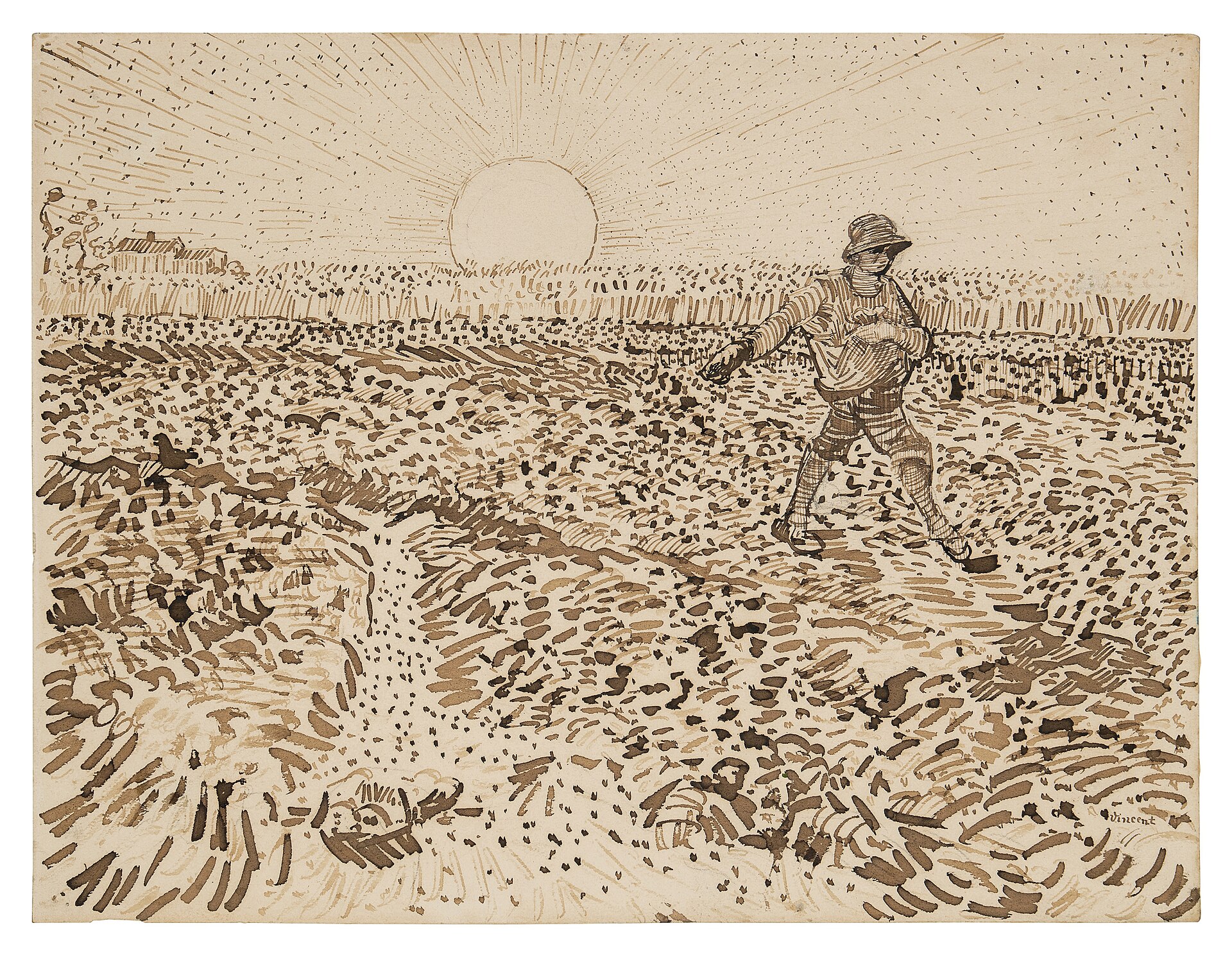
Sower with Setting Sun. Vincent van Gogh, mid July 1888. Sotheby's, New York, 18 November 2025, lot 4. Public domain.