
Psalm 140
13 verses · Psalm of lament
The proud hide a snare for me; the cords of their net are spread along the path, and lures are set out for me. Selah
Introduction
David, the Hunted Man's Prayer, Book 5: The return and the great Hallelujah, Poetry, Psalms Overview.
David wrote this as a man hunted by enemies who had more power than he did and planned his ruin in secret. The heading names no occasion, so the enemies are described rather than named. It is a prayer for rescue set out in short stanzas marked off by the word Selah. Listen for the pictures of snakes, snares and hidden nets, and for how the judgment asked for fits the harm that was planned. It ends in confidence that God defends the poor and the needy.
Context
- Who
- Israelites at the mercy of powerful men who planned their ruin in private
- Where
- A hunted man's country, where the traps are set along the paths he has to walk
- When
- The united monarchy under David. The heading reads To the Overseer, a Psalm of David, which places it in his reign, about 1010 to 970 BC; no event is named in it
Historical context
The heading gives David and the director of music and no occasion, so the enemies are described rather than named. Some readers name Saul, and a Jewish tradition names Doeg the Edomite, the informer of 1 Samuel 22. The enemies are first described as snakes, a real and common danger in that country, where a man working a stone terrace could be struck without warning. Then they become trappers, and the equipment is listed in the order a hunter would set it: a hidden cord, a net spread at the roadside, lures put out, and a pit. Covering the head in the day of battle is a helmet. The judgments asked for are fitted to the crimes, since burning coals, a pit and being hunted down mirror exactly what the violent men were arranging.
Significance
The first hearers knew what it was to be targeted by men with more power than they had and no interest in a fair fight. The psalm ends on two ordinary people God is said to defend by policy, the poor and the needy, and on the upright dwelling in His presence.
This chapter in Jewish lifeWhat this chapter is in Jewish life and reading.
What is done
Psalm 140 stands in the third Davidic collection, which the book's structure file gives as Psalms 108 to 110 and 138 to 145. It is a prayer for rescue from violent men, and the corpus holds no liturgical locator for it, so this site records the collection and the reading rather than a custom.
How it is read
Rashi reads the enemy of this psalm as Esau. The desires of the wicked in the ninth verse are the desires of "the wicked Esau", the armies that surround in the tenth are the troops of Esau, and the slanderer of the twelfth is Esau "who would trap with his mouth" (Rashi on Psalms 140:9:1, 140:10:1 and 140:12:1, the Judaica Press complete Tanach with Rashi, translated by A. J. Rosenberg, CC-BY). Medieval Jewish commentary uses the name Esau, and its partner name Edom, for the power that held the Jewish people in its own day, and this site records Rashi's own setting at /featured/isaiah-53-and-the-rabbis, which gives him as Rashi of Troyes, 1040 to 1105. This site reports his words and names their setting, and it holds that no reading of a psalm licenses contempt for any people. The posture this site takes toward rabbinic sources generally is set out at /featured/reading-rabbinic-sources-as-a-christian. The rest of Rashi's comments here are on wording and on the hunt. He argues from the use in Deuteronomy that the word in the fourth verse means venom rather than wrath, gives the Old French words for venom and for a spider, and explains the fowler's practice in the sixth verse, where a long rope tied to a net is drawn when the birds settle under it. On the ninth verse he names a second reading from the rabbis, at Bereshit Rabbah 75:9, which takes the word for the plot as the bit that muzzles a camel. Radak, Ibn Ezra, Metzudat David and Malbim comment with no English version in the corpus and stand as citations: Radak on Psalms 140:1:1, Ibn Ezra on Psalms 140:2:1, Metzudat David on Psalms 140:5:1, Malbim on Psalms 140:1:1.
What the rabbis say
The corpus records thirty-nine locators on this chapter, thirty-two Midrash and seven Talmud. The whole psalm is taken up at Midrash Tehillim 140:1. The venom under the lips is taken up at Midrash Tehillim 120:2 and Avot DeRabbi Natan 39:3, and the hidden snare at Esther Rabbah 7:6. The ninth verse is the one the rabbis worked hardest, with locators at Bereshit Rabbah 75:9, Vayikra Rabbah 21:2, Shemot Rabbah 20:1, Tanna DeBei Eliyahu Rabbah 24:1, Midrash Shmuel 21:3 and Megillah 6a:19. The closing promise that the righteous will give thanks to God's name is taken up at Sifrei Devarim 10:1, Midrash Tehillim 11:7, Midrash Tehillim 141:1, Berakhot 32b:22 and Jerusalem Talmud Berakhot 5:1:8. Each is a locator without text in the corpus.
Sources: Rashi, Rashi on Psalms 140:3:1, 140:4:1, 140:6:1, 140:9:1, 140:9:3, 140:10:1, 140:11:1, 140:12:1 and 140:13:1, the Judaica Press complete Tanach with Rashi, translated by A. J. Rosenberg, CC-BY; Radak, Radak on Psalms 140:1:1, cited only, no English version in the corpus; Ibn Ezra, Ibn Ezra on Psalms 140:2:1, cited only; Metzudat David, Metzudat David on Psalms 140:5:1, cited only; Malbim, Malbim on Psalms 140:1:1, cited only; Midrash, Bereshit Rabbah 75:9, as Rashi cites it; Midrash Tehillim 140:1, 120:2, 11:7 and 141:1, Vayikra Rabbah 21:2 and 34:15, Shemot Rabbah 20:1, Tanna DeBei Eliyahu Rabbah 24:1, Midrash Shmuel 21:3, Esther Rabbah 7:6, Sifrei Devarim 10:1; Babylonian Talmud, Megillah 6a:19, Berakhot 32b:22, Avot DeRabbi Natan 39:3; Jerusalem Talmud, Berakhot 5:1:8, Yevamot 15:2:2, Sanhedrin 6:10:2; MannaFest, the collections of the Psalter, src/components/book/dossier-content/psalms-structure.ts; Rashi of Troyes, 1040 to 1105, at /featured/isaiah-53-and-the-rabbis; the posture toward rabbinic sources, at /featured/reading-rabbinic-sources-as-a-christian, 2026.
Psalms 140:1-3
Rescue me, O LORD, from evil men: The danger named is men of violence who devise evil in the heart and stir up war all day. The weapon is the tongue, sharpened like a snake, with the venom of vipers on the lips. Romans 3:13 quotes that last line word for word.
Psalms 140:1
“Snatch me away, O Lord, from the evil man. The devil cannot deceive us so much by himself as he can through the instrument of a man; and it is from this that the prophet prays to be delivered.”
Jerome · written before 420 · Homily 50, on Psalm 139patristic
2 more voices on this verseWhat preachers and commentators have said about this verse, in their own words.
Psalms 140:1
“Deliver me, O Lord, from the evil man. It reads like a clause of the Lord's prayer, "Deliver us from evil." David does not so much plead against an individual as against the species represented by him, namely, the being whose best description is—"the evil man." There are many such abroad; indeed we shall not find an unregenerate man who is not in some sense an evil man, and yet all are not alike evil. It is well for us that our enemies are evil: it would be a horrible thing to have the good against us.”
Charles Spurgeon · The Treasury of David, Vol. 7 (1885)Particular Baptist
Psalms 140:1
“Being as he was a figure of Christ, we need not wonder that the agents of the devil directed so much of their rage against him. And this is the reason why he animadverts so sharply upon their rancor and treachery.”
John Calvin · Commentaries (1554)reformed
who devise evil in their hearts: The plotting starts in the heart and ends in open war. The verb for stir up, gur, can mean to gather together, so they gather others for war. Psalm 120:7 sets the same contrast of a man for peace among men bent on war.
Psalms 140:2
“Which imagine mischiefs in their heart,.... This shows that not a single person barely is meant but more, as Saul's courtiers; who were secretly and continually meditating mischief against David, traducing him to Saul, and devising things to take away his life.”
2 more voices on this verse
Psalms 140:2
“Which imagine mischiefs in their heart. They cannot be happy unless they are plotting and planning, conspiring and contriving. They seem to have but one heart, for they are completely agreed in their malice; and with all their heart and soul they pursue their victim. One piece of mischief is not enough for them; they work in the plural, and prepare many arrows for their bow. What they cannot actually do they nevertheless like to think over, and to rehearse on the stage of their cruel fancy. It is an awful thing to have such a heart disease as this.”
Charles Spurgeon · The Treasury of David, Vol. 7 (1885)Particular Baptist
Psalms 140:2
“Those who can agree in nothing else can agree to persecute a good man. Herod and Pilate will unite in this, and in this they resemble Satan, who is not divided against himself, all the devils agreeing in Beelzebub.”
Matthew Henry · Commentary on the Whole Bible (1707-1721)puritan
They sharpen their tongues like snakes: The viper, akshub, is named only in this verse. The snake recalls Genesis 3:1, where the first deceit came from a serpent's mouth. The first Selah ends the stanza here, on tongues and lips full of venom.
Psalms 140:3
“They have sharpened their tongues like a serpent. The rapid motion of a viper's tongue gives you the idea of its sharpening it; even thus do the malicious move their tongues at such a rate that one might suppose them to be in the very act of wearing them to a point, or rubbing them to a keen edge. It was a common notion that serpents inserted their poison by their tongues, and the poets used the idea as a poetical expression, although it is certain that the serpent wounds by his fangs and not by his tongue.”
Charles Spurgeon · The Treasury of David, Vol. 7 (1885)Particular Baptist
2 more voices on this verse
Psalms 140:3
“They have sharpened their tongues like a serpent,.... Which Kimchi says it does before it bites. Aristotle (i) observes, that the tip or extreme point of a serpent's tongue is as small as a hair, and so exceeding sharp and piercing. Arama interprets this of the sharpness and cunning of the serpent; and particularly the serpent that deceived Eve, and spake cunningly to her.”
Psalms 140:3
“The venom of asps is under their lips. For they seem to have words of friendship, yet they are full of death-dealing poison.”
Jerome · written before 420 · Homily 50, on Psalm 139patristic
Cross references
Psalms 140:3
- Quoted inRomans 3:13“Their throats are open graves; their tongues practice deceit.” “The venom of vipers is on their lips.”
'the poison of asps is under their lips' (sin catena)
Psalms 140:4-5
Guard me, O LORD, from the hands of the wicked: The plea of verse 1 returns here, with men of violence named again, and what they scheme at is a stumble. Verse 5 sets three traps along one path, a snare, the cords of a net, and lures. The trap is laid where he must walk.
Psalms 140:4
“Keep me, O Lord, from the hands of the wicked. To fall into their hands would be a calamity indeed. David in his most pitiable plight chose to fall into the hand of a chastising God rather than to be left in the power of men. No creature among the wild beasts of the wood is so terrible an enemy to man as man himself when guided by evil, and impelled by violence. The Lord by providence and grace can keep us out of the power of the wicked.”
Charles Spurgeon · The Treasury of David, Vol. 7 (1885)Particular Baptist
The proud hide a snare for: The proud are the men of violence of verse 4, named now by their arrogance. The second Selah closes this stanza on the hunter's gear. Psalm 141:9 picks up the same snares and lures in the next prayer.
Psalms 140:5
“The proud have hid a snare for me. Proud as they are, they stoop to this mean action: they use a snare, and they hide it away, that their victim may be taken like a poor hare who is killed without warning—killed in its usual run, by a snare which it could not see. David's enemies wished to snare him in his path of service, the usual way of his life. Saul laid many snares for David, but the Lord preserved him.”
Charles Spurgeon · The Treasury of David, Vol. 7 (1885)Particular Baptist
Psalms 140:6-8
The stanza opens with a confession, You are my God, and then asks to be heard. The head is covered in the day of battle, and the Hebrew word is nesheq, military equipment, so the day is the day of weapons. He asks God to deny the wicked their desires.
Psalms 140:6
“I said to the Lord: You are my God. Unless a man is holy, he cannot say this little verse; he who is not reigned over by sin, he it is who says, 'The Lord is my portion.'”
Jerome · written before 420 · Homily 50, on Psalm 139patristic
2 more voices on this verse
Psalms 140:6
“I said unto the Lord, Thou art my God. Here was David's stay and hope. He was assured that Jehovah was his God, he expressed that assurance, and he expressed it before Jehovah himself. That had need be a good and full assurance which a man dares to lay before the face of the heart searching Lord. The Psalmist when hunted by man, addressed himself to God.”
Charles Spurgeon · The Treasury of David, Vol. 7 (1885)Particular Baptist
Psalms 140:6
“When his enemies sharpened their tongues against him, did he sharpen his against them? No; adders' poison was under their lips, but grace was poured into his lips, witness what he here said unto the Lord, for to him he looked, to him he directed himself, when he saw himself in so much danger, through the malice of his enemies: and it is well for us that we have a God to go to.”
Matthew Henry · Commentary on the Whole Bible (1707-1721)puritan
O GOD the Lord, the strength: GOD in capitals marks the divine name, set here beside Lord, so the psalmist calls on both the covenant name and the title of master. The covering of the head is the work of a helmet. Isaiah 59:17 puts the helmet of salvation on God Himself.
Psalms 140:7
“O God the Lord, the strength of my salvation, thou hast covered my head in the day of battle. When he looked back upon past dangers and deliverances, the good man felt that he should have perished had not the Lord held a shield over his head. In the day of the clash of arms, or of the putting on of armour (as some read it), the glorious Lord had been his constant Protector.”
Charles Spurgeon · The Treasury of David, Vol. 7 (1885)Particular Baptist
Grant not, O LORD, the desires: The third Selah falls here, ending the stanza of confession and plea. The fear in the last clause is pride, that success would lift the wicked up. The proud of verse 5 would be exalted by success.
Psalms 140:8
“Grant not, O Lord, the desires of the wicked. Even they are dependent upon thee they can do no more than thou dost permit. Thou dost restrain them; not a dog of them can move his tongue without thy leave and license. Therefore I entreat thee not to let them have their way. Even though they dare to pray to their, do not hear their prayers against innocent men. Assuredly the Lord Jehovah will be no accomplice with the malevolent; their desires shall never be his desires; if they thirst for blood he will not gratify their cruelty.”
Charles Spurgeon · The Treasury of David, Vol. 7 (1885)Particular Baptist
1 more voice on this verse
Psalms 140:8
“Proud men, when they prosper, are made prouder, grow more impudent against God and insolent against his people, and therefore, "Lord, do not prosper them." 2. This he prays for (as we read it); but some choose to read it rather as a prophecy, and the original will bear it. If we take it as a prayer, that proceeds from a spirit of prophecy, which comes all to one.”
Matthew Henry · Commentary on the Whole Bible (1707-1721)puritan
Psalms 140:9-11
May the heads of those who surround me: The requests are plain. Let the trouble their lips caused come on their heads, let burning coals and fire and the miry pits take them with no rising. Deuteronomy 19:19 sets the same measure for a false witness, that what he intended be done to him.
Psalms 140:9
“The head of their compassing about, the labor of their own lips shall cover them. Just as a serpent, when it sees someone coming to strike it, makes a coil of its whole body and hides its head in the middle, where it knows its life resides: so too these heretics, by the discourse of the philosophers and of Aristotle and the rest, seem to hide themselves, and as it were to shield and defend themselves.”
Jerome · written before 420 · Homily 50, on Psalm 139patristic
1 more voice on this verse
Psalms 140:9
“As for the head of those that compass me about, let the mischief of their own lips cover them. To the Lord who had covered his head amid the din of arms the Psalmist appeals against his foes, that their heads may be covered in quite another sense—covered with the reward of their own malice. David's foes were so many that they hemmed him in, encircling him as hunters do their prey. It is little wonder that he turns to the Lord in his dire need.”
Charles Spurgeon · The Treasury of David, Vol. 7 (1885)Particular Baptist
May burning coals fall on them: Burning coals falling from above recall the fire rained on Sodom in Genesis 19:24, and Psalm 11:6 uses the same image for the wicked. Being thrown into pits recalls Numbers 16:33, where Korah's company went down alive into the ground. Neither group rose again.
Psalms 140:10
“Let burning coals fall upon them. Then will they know that the scattering of the firebrands is not the sport they thought it to be. When hailstones and coals of fire descend upon them, how will they escape? Even the skies above the wicked are able to deal out vengeance upon them. Let them be cast into the fire. They have kindled the flames of strife, and it is fair that they should be cast therein. They have heated the furnace of slander seven times hotter than it was wont to be heated, and they shall be devoured therein.”
Charles Spurgeon · The Treasury of David, Vol. 7 (1885)Particular Baptist
May no slanderer be established in: Slanderer is literally a man of tongue, which ties this verse back to the sharpened tongues of verse 3. The calamity that hunts him reverses the snare the hunter set in verse 5. The trapper becomes the hunted.
Psalms 140:11
“Let not such men as Doeg think to reign long, for his doom will be theirs, Ps. ii. A lying tongue is but for a moment, but the lip of truth shall be established for ever. [2.] Evil doers must expect to be destroyed: Evil shall hunt the violent man, as the blood-hound hunts the murderer to discover him, as the lion hunts his prey to tear it to pieces.”
Matthew Henry · Commentary on the Whole Bible (1707-1721)puritan
2 more voices on this verse
Psalms 140:11
“Let not an evil speaker be established in the earth. For that would be an established plague, a perpetual curse. Men of false and cruel tongues are of most use when they go to fatten the soil in which they rot as carcases: while they are alive they are the terror of the good, and the torment of the poor. God will not allow the specious orators of falsehood to retain the power they temporarily obtain by their deceitful speaking. They may become prominent, but they cannot become permanent.”
Charles Spurgeon · The Treasury of David, Vol. 7 (1885)Particular Baptist
Psalms 140:11
“Let not an evil speaker be established in the earth,.... One that sets his mouth against the heavens, and speaks evil of God; of his being, perfections, purposes, and providences: whose tongue walks through the earth, and speaks evil of all men, even of dignities; and especially of the saints of the most High, and of the Gospel and ways of Christ.”
Psalms 140:12-13
the LORD upholds justice for the poor: The last verses answer the prayer with what the psalmist knows, that justice for the poor is upheld by the LORD and the needy defended. The righteous will praise the name, and the upright will live in God's presence. That is where the psalm stops.
Psalms 140:12
“I know that the Lord will maintain the cause of the afflicted, and, the right of the poor. All through the Psalm the writer is bravely confident, and speaks of things about which he had no doubt: in fact, no Psalm can be more grandly positive than this protest against slander. The slandered saint knew Jehovah's care for the afflicted, for he had received actual proofs of it himself. "I will maintain it" is the motto of the great Defender of the rights of the needy. What confidence this should create within the bosoms of the persecuted and poverty stricken!”
Charles Spurgeon · The Treasury of David, Vol. 7 (1885)Particular Baptist
1 more voice on this verse
Psalms 140:12
“In this, as in other things, David was a type of Christ, that he suffered before he reigned, was humbled before he was exalted, and that as there were many who loved and valued him, and sought to do him honour, so there were many who hated and envied him, and sought to do him mischief, as appears by these verses, where, I.”
Matthew Henry · Commentary on the Whole Bible (1707-1721)puritan
Surely the righteous will praise Your: Surely translates ak, a word of firm assurance after the requests of verses 9 to 11. The upright who dwell in the presence of the LORD answer the question of Psalm 15:1, who may dwell on His holy hill. The lament closes in praise.
Psalms 140:13
“Surely the righteous shall give thanks unto thy name. The former Psalm had its "surely", but this is a more pleasing one. As surely as God will slay the wicked he will save the oppressed, and fill their hearts and mouths with praises. Whoever else may be silent, the righteous will give thanks; and whatever they may suffer, the matter will end ill their living through the trial, and magnifying the Lord for his delivering grace. On earth ere long, and in heaven for ever, the pure in heart shall sing unto the Lord.”
Charles Spurgeon · The Treasury of David, Vol. 7 (1885)Particular Baptist
1 more voice on this verse
Psalms 140:13
“The upright shall dwell with your countenance. And what is the countenance of God, if not Christ? 'Who thought it not robbery to be equal with God.'”
Jerome · written before 420 · Homily 50, on Psalm 139patristic
How this psalm is built
The form: A prayer against the whole race of evildoers rather than one man, reading like the clause of the Lord's prayer that asks to be delivered from evil, as Spurgeon classes it.
The patterns in this chapter
| Device | What it does | Where to see it |
|---|---|---|
| Selah, three times | The word stands at the end of verse 3, verse 5 and verse 8, and it divides the psalm into its parts. The first Selah closes the picture of the tongues, the second closes the picture of the traps, and the third closes the prayer that the wicked not get what they want. What follows the third is the turn to confidence at verses 12 and 13.Albert Barnes, Notes, Explanatory and Practical, on the Old and New Testaments, 1832 to 1869, on Psalm 140:5. | Psalm 140:3, Psalm 140:5, Psalm 140:8 |
| The trapper's kit, listed in order | Verse 5 names the equipment piece by piece, a hidden snare, the cords of a net spread along the path, and lures set out. Barnes reads the cords as the strings and twine of men laying a net to catch birds. Spurgeon notes that the proud stoop to this mean action and hide the snare away so the victim is taken unawares. Verse 10 adds the miry pit, the last item of the same trade.Albert Barnes, Notes, Explanatory and Practical, on the Old and New Testaments, 1832 to 1869, on Psalm 140:5. | Psalm 140:5, Psalm 140:10 |
| Tongues sharpened like snakes | Verse 3 makes the enemies serpents before it makes them hunters. Spurgeon writes that the rapid motion of a viper's tongue gives the idea of its being sharpened, and that the malicious move their tongues in the same way. Gill reports from Kimchi that a serpent sharpens its tongue before it bites. The image is exact and it is the line Paul quotes.Charles Spurgeon, The Treasury of David, Vol. 7, 1885, on Psalm 140:3. | Psalm 140:3 |
| The sentence fitted to the crime | Verses 9 and 10 ask that what the enemies made fall on others come back on them. The trouble their lips caused covers their heads, the men who dug the pit are thrown into the miry pit, and those who set fire to reputations meet burning coals. The judgments asked for are the same actions returned to the sender.Matthew Henry, Commentary on the Whole Bible, 1710, on Psalm 140:8. | Psalm 140:9, Psalm 140:10, Psalm 140:11 |
The structure
8 more paragraphs on the patterns
Selah stands at the end of verse 3, verse 5 and verse 8, and the store's own count confirms three in the chapter. The word divides the psalm into its parts. The first closes the picture of the tongues, the second closes the picture of the traps, and the third closes the prayer that the wicked not get what they want. What follows is the turn to confidence at verses 12 and 13.
Verses 9 to 11 ask that what the enemies made fall on others come back on them. The trouble their lips caused covers their heads, the men who dug the pit are thrown into the miry pit, and calamity hunts down the man of violence. The judgments asked for are the same actions returned to the sender.
The prophecy and the New Testament's use
Verse 3 is quoted in the New Testament. Paul gathers a chain of Old Testament sentences about human speech at Romans 3:13 and the last of them is this psalm's line, that the venom of vipers is on their lips. What the psalm says of one set of enemies Paul applies to the whole race, as part of the argument that no one is righteous. A student reading Romans 3 is reading Psalm 140 whether he knows it or not.
The debate
Whether the psalm aims at one man or at a class is genuinely open, and the two readings change how the imprecations of verses 9 to 11 are heard. On Barnes's reading they are a prayer about named men in a real conspiracy. On Spurgeon's they are a prayer about evil itself, which is why he hears the Lord's prayer in the first line. Both readings agree on the ending, where the psalm stops asking and states what God does by settled practice for the poor and the needy.
Where it sits
Psalms 140, 141 and 142 stand together as three laments of a hunted man. Read in order they move from the traps set outside a man, to the guard he asks for over his own mouth, to the loneliness of a cave with no one at his right hand.
Keep studying
Sources for this chapter
The summary
Jamieson, Fausset & Brown, Commentary Critical and Explanatory; John Calvin, Commentaries; John Wesley, Notes on the Old Testament and Matthew Henry, Complete Commentary.
The form and classifications
Adam Clarke, Commentary on the Bible, 1832, on Psalm 140:1; Albert Barnes, Notes, Explanatory and Practical, on the Old and New Testaments, 1832 to 1869, on Psalm 140:2 and Charles Spurgeon, The Treasury of David, Vol. 7, 1885, on Psalm 140:1.
The exposition
Albert Barnes, Notes on the Book of Psalms; Charles Spurgeon, The Treasury of David; Franz Delitzsch, Biblical Commentary on the Psalms; Jamieson Fausset and Brown, Commentary Critical and Explanatory on the Whole Bible; Jamieson, Fausset and Brown, Commentary Critical and Explanatory on the Whole Bible; John Gill, Exposition of the Old Testament; Keil and Delitzsch, Biblical Commentary on the Old Testament and Matthew Henry, Commentary on the Whole Bible.
The painting
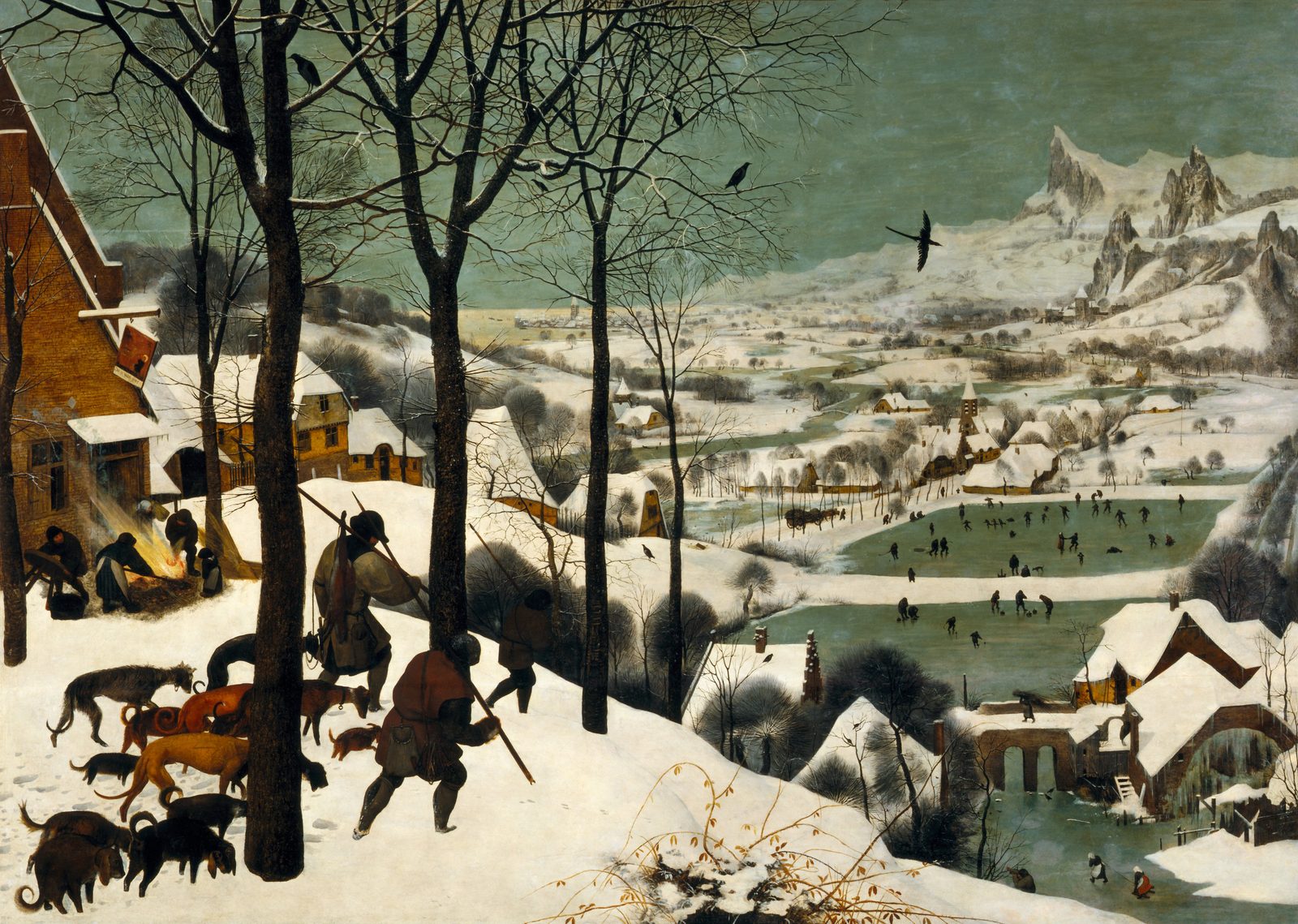
The Hunters in the Snow. Pieter Brueghel the Elder, 1565. Wikimedia Commons. Public domain.