
The same revolt, retold as theology · written c. 124-100 BC
2 Maccabees
Not a sequel but a second telling, where the martyrs take center stage and God is named on every page.
- 15Chapters
- 555Verses
- c. 150-100 BCEWritten
- GreekOriginal language
King James Version Apocrypha (1769 standardized text) · public domain
Read 2 Maccabees
King James Version + Apocrypha (standardized 1769 text), eBible.org USFX edition of the Crosswire/eBible KJV — Public Domain
Featured studies on this book
— the deep dives, each its own page
The Maccabean Revolt
Gustave Doré, Mattathias and the Apostate (1866) — Public domain, via Wikimedia Commons

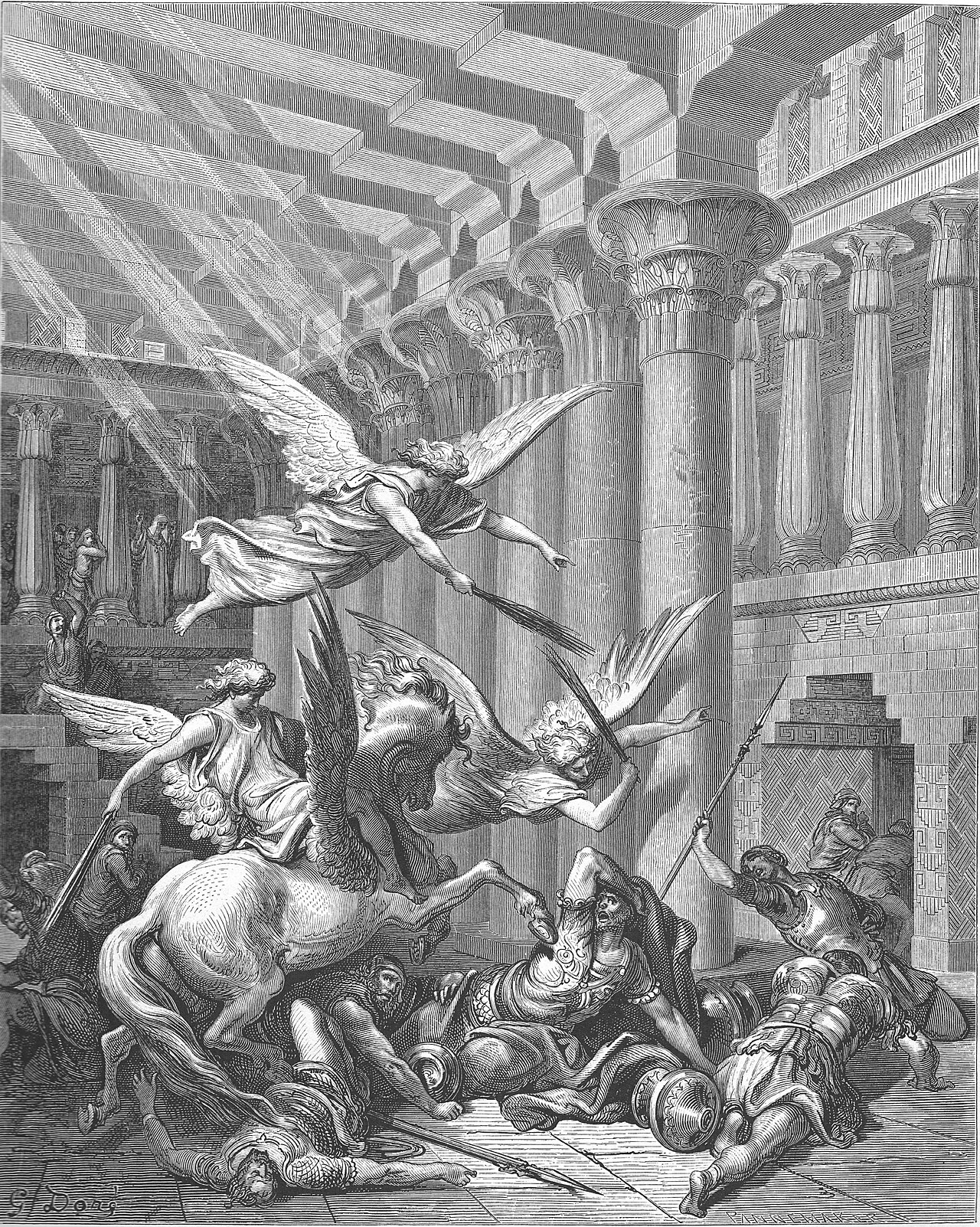
Heliodorus in the Treasury
Raphael, The Expulsion of Heliodorus from the Temple (1511-1512) — Public domain, via Wikimedia Commons

Prayers, Merits, and the Dead
Peter Paul Rubens and workshop, The Triumph of Judas Maccabeus (c. 1634-1636) — Public domain, via Wikimedia Commons

The Seven Brothers and Their Mother
Gustave Doré, The Courage of a Mother (1866) — Public domain, via Wikimedia Commons
Plain answers first
What this book is
2 Maccabees is not a continuation of 1 Maccabees. It covers a shorter and slightly earlier stretch of the same crisis, roughly 180 to 161 BC, and stops with a victory that 1 Maccabees passes in a paragraph.
The author says openly what he is doing. Someone named Jason of Cyrene wrote a five-volume history, now lost; this book is a condensed version of it, and the writer explains that boiling down a long work is hard, sweaty labor meant to give readers pleasure and profit. That candor is unusual for an ancient book, and it tells you the genre: this is a shaped retelling, not an archive.
The tone is the opposite of the first book. God intervenes visibly. Angelic horsemen appear in the sky. Prayer changes battles. Where 1 Maccabees is a court chronicle, this is a sermon with a battle map.
Its center is not a general but the martyrs. An aged scribe named Eleazar refuses to eat pork or even to pretend to, because young men are watching. Then a mother and her seven sons are tortured to death one by one, each brother answering the king with a confession of faith. They say plainly that the King of the world will raise them up to everlasting life, and their mother tells them God made everything out of nothing. These are among the clearest statements of bodily resurrection and creation from nothing written before the New Testament.
It was written in Greek, probably somewhere between 124 and 100 BC, and it opens with two letters urging Jews in Egypt to keep the festival of the rededicated temple.
Why a student of the 66 should still open it
Why read it: and how
The martyr chapters are the reason to read this book. Hebrews 11:35 speaks of some who were tortured, refusing to be released, so that they might obtain a better resurrection, and many readers have heard chapter 7 behind that line. Whether or not the writer of Hebrews had this text open, he is describing the kind of faith it records. The book also shows Jewish belief in bodily resurrection taking clear shape a century and a half before Paul argued it in 1 Corinthians 15, which matters when you read the Pharisees and Sadducees arguing about it in the Gospels. And the mother's line about God making the world out of things that did not exist is a landmark in the history of that doctrine.
Read 1 Maccabees first for what happened, then read this for what it meant to the people it happened to. Chapters 6 and 7 are the heart; read them slowly, then read Hebrews 11:32-40. When you reach chapter 12, read the passage carefully and know that you are standing where a five-hundred-year disagreement runs. State the disagreement fairly, and let the passage be what it is: an early witness to a practice, in a book the church has never agreed to call Scripture.
The canon question, honestly
Why it stands outside the 66
Like the first book, 2 Maccabees stands outside the Hebrew Bible and outside the age of prophecy as Jewish tradition reckoned it. But its canonical status carried unusual weight in the sixteenth century, and honesty requires naming why. In chapter 12 Judas collects money and sends it to Jerusalem for a sin offering on behalf of soldiers who died wearing pagan tokens, and the writer calls it a holy and wholesome thought to pray for the dead. Rome cites that passage in support of prayers for the dead and of purgatory, and affirmed the book as Scripture at Trent in 1546. The Reformers demurred, arguing that a doctrine cannot rest on a book whose scriptural standing is the very thing in dispute, and pointing out that the practice appears nowhere in the Hebrew Bible or the New Testament. Both sides were arguing in good faith about a real question, and this is a large part of why the canon question mattered so much in that century: where the boundary of Scripture falls decides which texts can settle a doctrine.
Doors into the text
Key moments
Verses 19-32. He names his source, Jason of Cyrene, and admits that abridging five volumes is exhausting work.
A minister sent to seize temple funds is stopped by a rider and two young men, and leaves a believer.
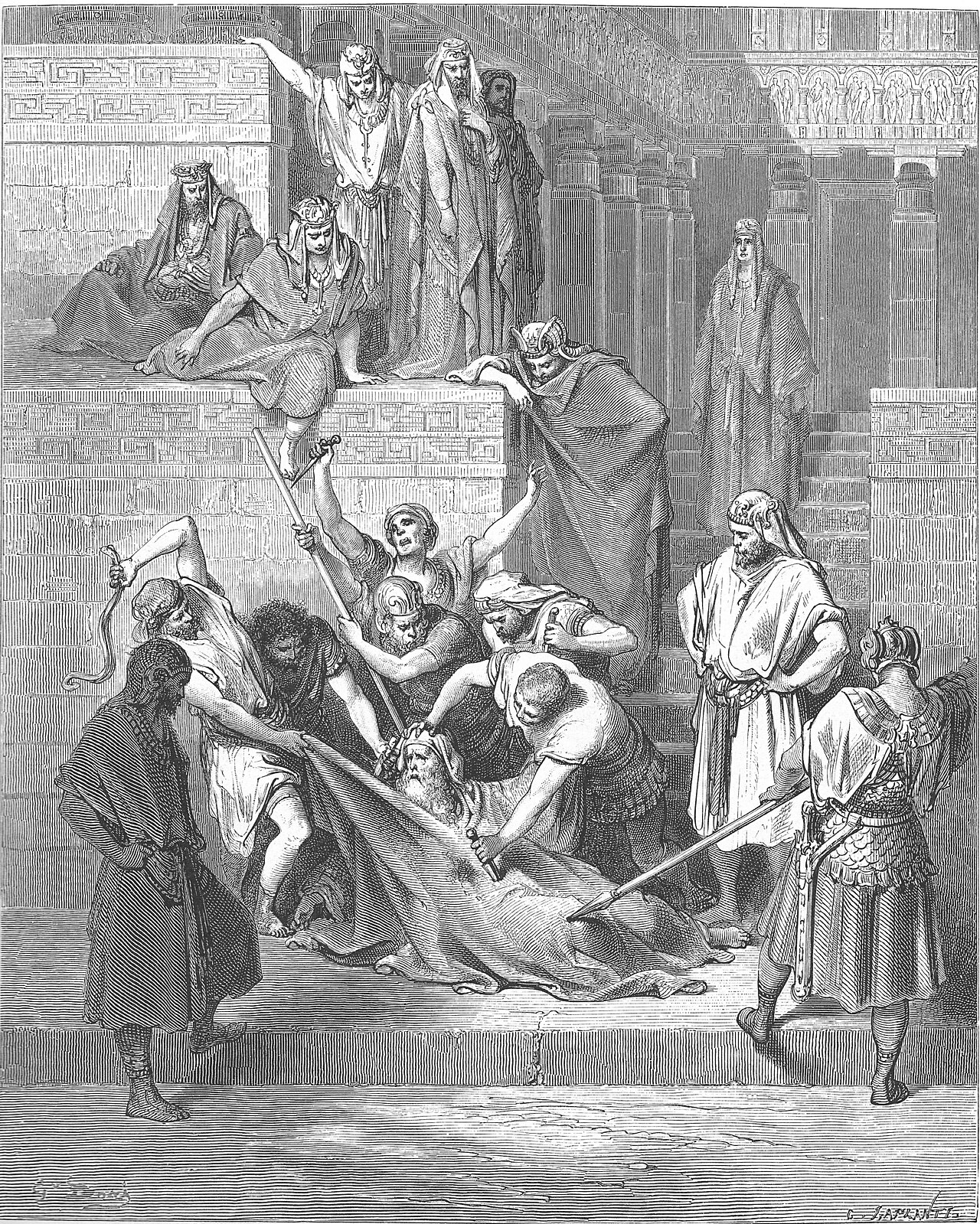
An old scribe refuses even to fake eating forbidden meat, because the young are watching and would learn to compromise.
The martyrdom chapter, with its clear confession of bodily resurrection and of God creating out of nothing.
Verses 43-45, the contested passage: Judas sends money for a sin offering for fallen soldiers, and the writer commends praying for the dead.
The book ends on a victory and a new festival, with Judas encouraged by a dream of Onias the priest and Jeremiah the prophet.
Plainly told
The story it tells
Not a sequel: a second telling
2 Maccabees is not a continuation of the first book. It retells a shorter, partly overlapping stretch of the same revolt, and says openly it is a condensed version of a longer, five-volume history by a writer named Jason of Cyrene, now lost.
A rider stops a robbery
A royal official sent to seize the Temple treasury is stopped in the treasury itself by a horseman and two young men who beat him nearly to death: and he leaves believing.
An old man will not even pretend
Under Antiochus's persecution, the aged scribe Eleazar is ordered to eat pork: or just pretend to. He refuses even the pretense, because the young are watching and would learn to compromise.
A mother and seven sons
The book's center: a mother watches seven sons tortured to death one at a time rather than break the law, each one answering the king with a confession of faith: that the King of the world will raise them to everlasting life, because he made the world out of nothing.
An offering for the fallen
After a battle, Judas takes up a collection and sends it to Jerusalem for a sin offering on behalf of soldiers who died carrying pagan tokens: a passage the writer calls "a holy and wholesome thought," and one that would echo through the canon debates fifteen centuries later.
Dates hedged where scholarship hedges
Where it sits in history
- c. 180–161 BC
The period the epitome covers: overlapping the first part of 1 Maccabees but stopping earlier, at a victory over Nicanor.
- c. 143 BC and 124 BC
The two prefatory letters urging Egyptian Jews to keep the rededication festival are dated within the book to these years.
- late 2nd–early 1st century BC
The epitome itself, the condensing of Jason of Cyrene's lost five-volume history into this book, is generally dated, a range still hedged by scholars.
The disagreement is old: here it is plainly
Where the traditions stand
Like 1 Maccabees, this book stands outside the Hebrew Bible and outside the era Jewish tradition regarded as prophetic. Jerome's Prologus Galeatus treats both Maccabees books together, noting that the second survives only in Greek: evidence, in his reading, that it was never a Hebrew original.
Its canonical status carried unusual weight at the Reformation, and honesty requires saying why: chapter 12:43–45 has Judas sending money to Jerusalem for a sin offering for the dead, with the writer calling prayer for the dead "a holy and wholesome thought." Rome pointed to that passage in defense of prayer for the dead, and affirmed the book as Scripture at Trent in 1546. The Reformers placed it in the Apocrypha instead, arguing that a contested doctrine cannot rest on a book whose own scriptural standing is the very thing in dispute: the practice appears nowhere in the Hebrew Bible or the New Testament.
Both sides argued in good faith about a real question, and it is a large part of why the canon boundary mattered so much in the sixteenth century: where Scripture's edge falls decides which books can settle a doctrine. Orthodox churches receive the book among the anagignoskomena and keep the mother and her seven sons on the liturgical calendar.
| Tradition | Where this book stands |
|---|---|
| jewish | not in Tanakh; Jewish tradition preserved the Hanukkah narrative through different channels |
| anglican | apocryphal — read for example of life and instruction of manners |
| catholic | canonical (deuterocanonical) |
| protestant | non-canonical; contains theology (prayers for the dead, purgatory suggestions) that Reformers specifically rejected |
| eastern orthodox | canonical (anagignoskomena) |
| oriental orthodox | canonical |
Real echoes only: each one attested, none invented
What the New Testament has made of it
"Others were tortured, not accepting deliverance; that they might obtain a better resurrection." The combination, refusing offered release, choosing martyrdom, hoping for a resurrection better than mere restoration to this life, matches the mother and her seven sons in 2 Maccabees 7 and is not found combined this way anywhere else in Second Temple literature.
Harold W. Attridge, The Epistle to the Hebrews (Hermeneia, Fortress Press, 1989), on Hebrews 11:35; widely noted across the commentary tradition on Hebrews 11.
2 threads into the 66
Its connections into Scripture
The seven brothers and their mother martyred under Antiochus IV, each refusing pork to escape torture on the hope of resurrection ("the King of the universe will raise us up"), are almost certainly the referent for Hebrews 11:35's "others were tortured, refusing to accept release, that they might rise again to a better life." The parallel is recognized across confessional lines.
2 Maccabees 2 records a tradition that Jeremiah hid the ark of the covenant and the tabernacle tent in a cave on Mount Nebo before the Babylonian destruction, to be revealed only "when God gathers his people together again and shows his mercy." Revelation 11:19 pictures the heavenly temple opening and the ark of the covenant being seen — a scene that many commentators read against this Jeremianic hidden-ark tradition.
Reception history, never our confession
What the church has made of it
The martyrdom of the mother and her seven sons became one of the most venerated stories in both East and West: relics associated with the family were honored at San Pietro in Vincoli in Rome, and the Byzantine calendar keeps their feast on August 1. Printed in the KJV's Apocrypha section alongside 1 Maccabees, it gave English readers the era's most vivid witness to Jewish martyrdom under persecution.
It stands as an early, explicit witness to a developed hope of bodily resurrection: the mother's line that God made the world "out of things that did not exist" is a landmark statement of creation from nothing, appearing a century and a half before Paul defends the resurrection at length in 1 Corinthians 15. The debate the Pharisees and Sadducees carry into the Gospels over whether the dead rise (Matthew 22:23–33 and parallels) has this book, among others, standing behind it.
The voices
What the teachers have said
“The first book of Maccabees is found in Hebrew, but the second is Greek, as can be proved from the very style.”
Every claim above rests on these
Where this comes from
- Bruce M. Metzger, An Introduction to the Apocrypha (Oxford, 1957)
- David A. deSilva, Introducing the Apocrypha: Message, Context, and Significance (Baker Academic)
- R. H. Charles, ed., The Apocrypha and Pseudepigrapha of the Old Testament, vol. 1: Apocrypha (Oxford, 1913)