
Court history of the Jewish revolt · written c. 100 BC
1 Maccabees
The sober, year-by-year account of how a priest's family took Judea back, and where Hanukkah comes from.
- 16Chapters
- 924Verses
- c. 134-104 BCEWritten
- HebrewOriginal language
King James Version Apocrypha (1769 standardized text) · public domain
Read 1 Maccabees
King James Version + Apocrypha (standardized 1769 text), eBible.org USFX edition of the Crosswire/eBible KJV — Public Domain
Featured studies on this book
— the deep dives, each its own page
The Maccabean Revolt
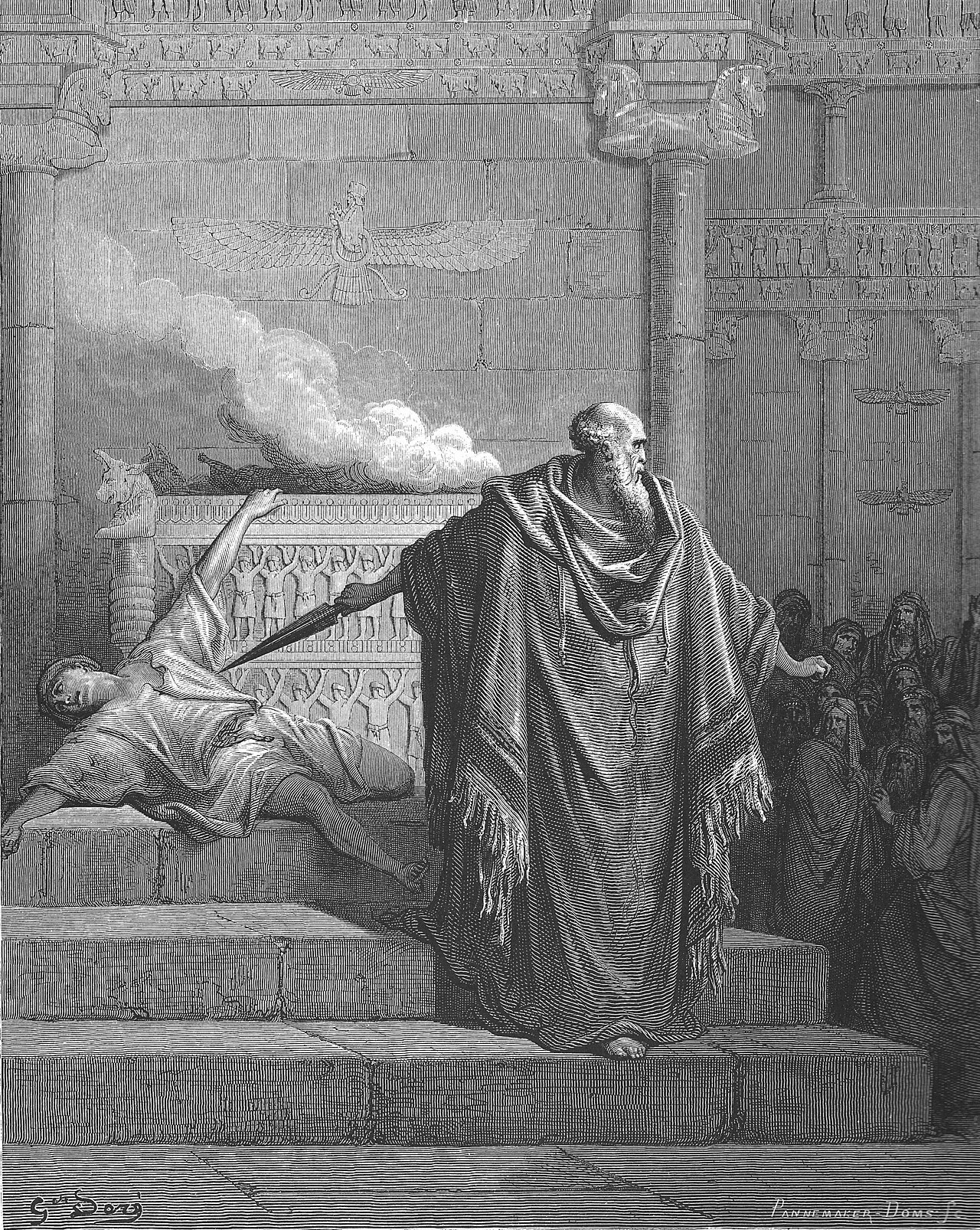
Gustave Doré, Mattathias and the Apostate (1866) — Public domain, via Wikimedia Commons

Hanukkah: the Feast the Revolt Made, MannaFest
Peter Paul Rubens and workshop, The Triumph of Judas Maccabeus (c. 1634-1636) — Public domain, via Wikimedia Commons

Judas Maccabeus, the Hammer, MannaFest
Peter Paul Rubens, The Triumph of Judas Maccabeus (c. 1635) — Public domain, via Wikimedia Commons
Plain answers first
What this book is
1 Maccabees is the closest thing we have to a straight history of the Jewish revolt against the Greek kings of Syria in the second century BC. It covers about forty years, from roughly 175 to 134 BC.
It opens with Alexander the Great, then moves quickly to Antiochus IV, who stripped the temple in Jerusalem, outlawed the Sabbath and circumcision, and set up a pagan altar on the altar of God. The book calls that altar the abomination of desolation, borrowing the phrase from Daniel.
Resistance begins with an old priest named Mattathias in the village of Modein, who refuses to sacrifice and flees to the hills with his sons. His son Judas, called Maccabeus, takes command and wins battle after battle against much larger armies. In 164 BC he retakes the temple mount, cleanses the sanctuary, and rededicates the altar with an eight-day festival that the book says should be kept every year. That festival is Hanukkah, and John 10:22 places Jesus in the temple at that feast in winter, walking in the shadow of this book.
After Judas falls in battle the story continues through his brothers Jonathan and Simon, who combine soldiering with diplomacy until Judea is effectively independent. Simon is assassinated at a banquet in the last chapter and his son John Hyrcanus takes over.
The style is restrained and deliberately old-fashioned, written to sound like Samuel and Kings. It was almost certainly composed in Hebrew around 100 BC, close to the events, though only the Greek translation survives. It is sympathetic to the family it describes, and never records a miracle. God is barely named directly, usually appearing behind words like heaven.
Why a student of the 66 should still open it
Why read it: and how
Without this book, the four hundred years between Malachi and Matthew are mostly dark. It explains where the Pharisees, the Sadducees, and the priest-kings of Jesus's day came from, why Judea was so brittle about foreign rule, and why a Roman garrison was in Jerusalem at all. It gives Hanukkah its origin and gives John 10:22 its setting. It shows what Daniel's abomination of desolation looked like when it happened, which matters for reading Jesus's words in Matthew 24. It is historical light, not devotional reading, and that is exactly what makes it indispensable.
Read it as history, quickly, the way you would read Kings. Chapters 1-4 are the heart, and if you read only one section, read those. Keep a timeline handy, because the book counts years by the Greek calendar. Read John 10:22-23 when you finish chapter 4, and let the two lock together. Then read 2 Maccabees for the same events told with a preacher's eye.
The canon question, honestly
Why it stands outside the 66
1 Maccabees is not in the Hebrew Bible. It was written after the period Jewish tradition regarded as the age of prophecy, and the rabbis did not include it among the holy books, even while the festival it describes was kept faithfully. Christians preserved it, and Jerome again noted it was outside the Hebrew list. The Reformers put it among the apocrypha, valuing it highly as history but not as Scripture; Rome affirmed it at Trent, and Orthodox churches read it. It is fair to say that no one on any side has ever doubted its worth as a historical record. The question was always whether history that is this valuable is therefore Scripture.
Doors into the text
Key moments
Antiochus IV plunders Jerusalem, bans the law, and sets up the abomination of desolation in December 167 BC.
The old priest kills a compromiser and an officer, flees to the hills, and rules that Jews may fight on the Sabbath to survive.
Judas cleanses the sanctuary in 164 BC and keeps an eight-day feast; this is where Hanukkah begins, and John 10:22 stands in its shadow.
Judas sends envoys to a rising western republic, admiring its strength; readers who know what Rome became read this chapter grimly.
Under Simon, Judea stops paying tribute, and the book dates real independence from that year.
Simon and two of his sons are killed at a banquet by his own son-in-law, and John Hyrcanus inherits a dynasty.
Plainly told
The story it tells
A king strips the Temple
Antiochus IV, a Greek king ruling from Syria, plunders the Jerusalem Temple, outlaws the Sabbath and circumcision, and sets up a pagan altar where the altar of God had stood. The book calls it "the abomination of desolation," borrowing Daniel's own phrase for the horror.
An old priest says no
In the village of Modein, a priest named Mattathias refuses to offer a pagan sacrifice, kills the officer who demanded it, and flees to the hills with his five sons. It is the spark of a revolt nobody expected to win.
Judas the Hammer
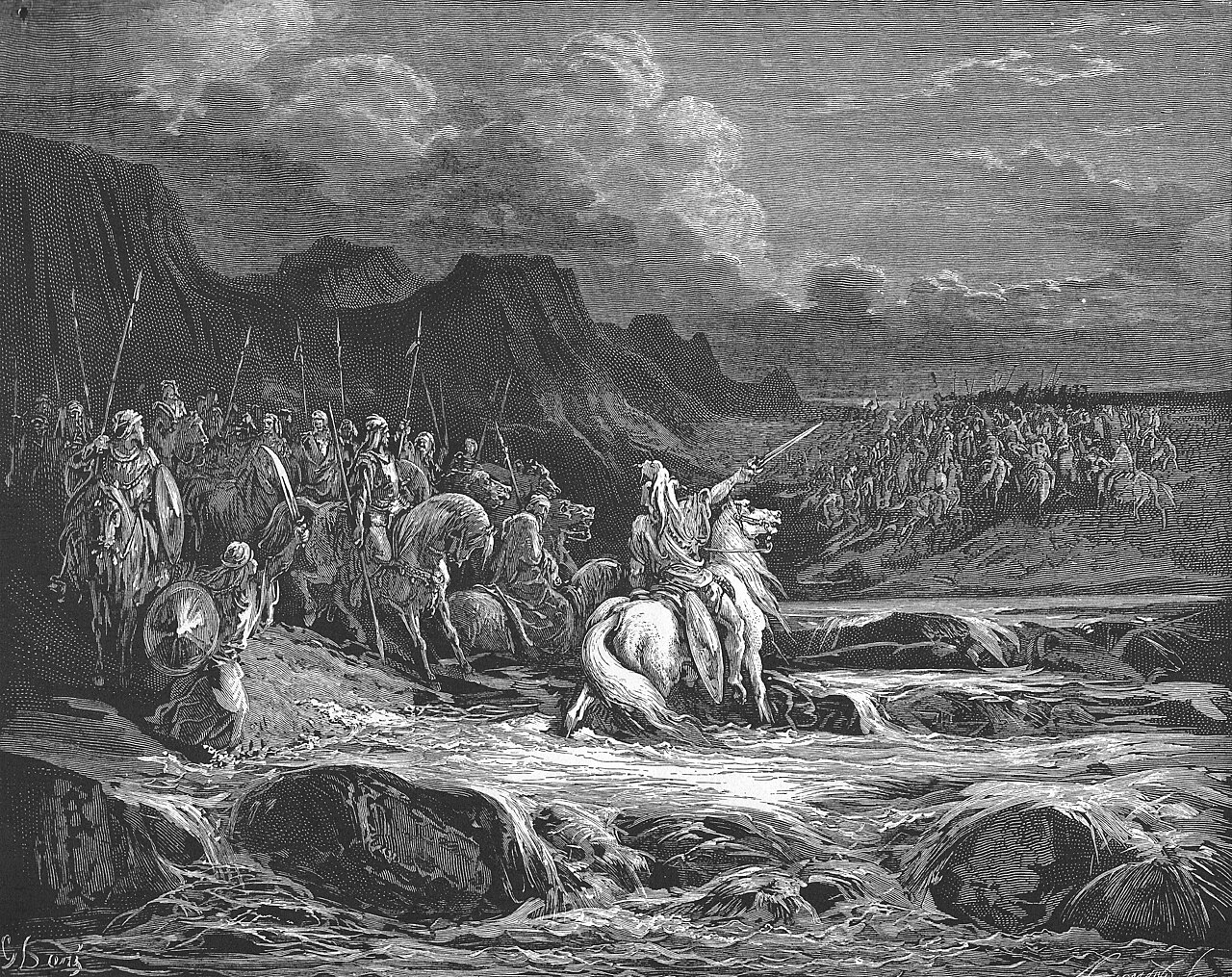
Mattathias's son Judas, nicknamed Maccabeus ("the hammer"), takes command and beats one Greek army after another, though badly outnumbered every time. In 164 BC he retakes the Temple mount and cleanses it.
Eight days that became a festival
Judas rededicates the altar with an eight-day celebration the book says should be kept every year after. That festival is Hanukkah, and John 10:22 places Jesus walking in the Temple at that very feast, in winter, generations later.
Brothers who kept going
After Judas falls in battle, his brothers Jonathan and Simon carry the fight on through both war and diplomacy, until Judea stops paying tribute to anyone. Real independence, the book says, dates from that year.
Murder at a banquet
In the last chapter Simon is assassinated at a feast by his own son-in-law, and his son John Hyrcanus inherits what is left standing: a dynasty bought at the cost of most of one family.
Dates hedged where scholarship hedges
Where it sits in history
- c. 175 BC
Antiochus IV Epiphanes takes the Seleucid throne; Hellenizing pressure on Jerusalem intensifies.
- 167 BC
The Temple is plundered and the abomination of desolation is set up; Sabbath and circumcision are outlawed.
- 167 BC
Mattathias refuses to sacrifice at Modein and flees to the hills with his sons.
- 166–160 BC
Judas Maccabeus leads the revolt; the Temple is retaken and rededicated in 164 BC.
- 160–142 BC
Jonathan, then Simon, combine warfare and diplomacy; Judea gains effective independence by 142 BC.
- 134 BC
Simon is assassinated; his son John Hyrcanus succeeds him.
- c. 100 BC
The book is composed in Hebrew, close enough to the events to reflect court/administrative record-keeping; only the Greek translation survives.
The disagreement is old: here it is plainly
Where the traditions stand
1 Maccabees was written after the period Jewish tradition regarded as the age of prophecy, so it never entered the Hebrew Bible, even though the festival it describes, Hanukkah, was kept faithfully by the same community that declined to canonize the book that records its origin. Jerome, translating the Vulgate around AD 391, listed both Maccabees books among the writings outside the Hebrew canon he was rendering, noting plainly that the first survived in Hebrew and the second only in Greek.
The Reformers followed the Hebrew canon and placed 1 Maccabees in the Apocrypha section of Protestant Bibles, including the King James Version of 1611, valued highly as history, read "for example of life and instruction of manners," but not treated as Scripture (Anglican Article VI). Rome affirmed it as Scripture at the Council of Trent in 1546, and Orthodox churches read it among the anagignoskomena, the books appointed to be read.
No tradition on any side has ever doubted its worth as history. The disagreement was never about whether the book is accurate: it was about whether accurate history is, by that fact alone, Scripture.
| Tradition | Where this book stands |
|---|---|
| jewish | not in Tanakh, but historically important; preserved in Greek and used by Josephus |
| anglican | apocryphal — read for example of life and instruction of manners, not used to establish doctrine |
| catholic | canonical (deuterocanonical) |
| protestant | non-canonical, useful for historical context |
| eastern orthodox | canonical (anagignoskomena) |
| oriental orthodox | canonical |
Real echoes only: each one attested, none invented
What the New Testament has made of it
John places Jesus in the Temple "at the feast of the dedication… and it was winter" — Hanukkah, the eight-day festival 1 Maccabees says Judas instituted when he rededicated the altar in 164 BC. This is a setting, not a quotation: the Gospel places Jesus inside the very festival this book explains.
Craig S. Keener, The Gospel of John: A Commentary (Baker Academic, 2003), on John 10:22; also Raymond E. Brown, The Gospel According to John I–XII (Anchor Bible, 1966), ad loc.
2 threads into the 66
Its connections into Scripture
1 Maccabees 4:36-59 records the rededication of the Jerusalem temple by Judas Maccabeus on 25 Kislev 164 BCE after its desecration by Antiochus IV. This event founded the eight-day festival John 10:22 calls 'the Feast of Dedication' (Hanukkah), during which Jesus walked in Solomon's portico and declared 'I and the Father are one.' Without 1 Maccabees the canonical Gospel reference is historically opaque.
1 Maccabees describes the 'abomination of desolation' set up on the temple altar by Antiochus IV (a pagan altar to Zeus over the altar of burnt offering) — fulfilling Daniel 8:13; 9:27; 11:31; 12:11. Jesus in Matthew 24:15 invokes this same Daniel phrase to describe a future desecration, drawing on the Maccabean precedent as the typological pattern for ultimate eschatological abomination.
Reception history, never our confession
What the church has made of it
Christians preserved 1 Maccabees even where they declined to canonize it, because without it the four hundred years between Malachi and Matthew go dark. It explains where the Pharisees, Sadducees, and priest-kings of Jesus's day came from, why Judea was so combustible under foreign rule, and what Daniel's abomination of desolation looked like when it actually happened: background Jesus draws on directly in Matthew 24.
Josephus independently narrates the same revolt in his Antiquities, giving the events outside testimony. Early English Bibles, including the 1611 King James, printed the book between the Old and New Testaments in its own Apocrypha section, where readers met it for centuries as sober, restrained history: a chronicle written, deliberately, in the plain style of Samuel and Kings.
The voices
What the teachers have said
“The first book of Maccabees is found in Hebrew, but the second is Greek, as can be proved from the very style.”
Every claim above rests on these
Where this comes from
- Bruce M. Metzger, An Introduction to the Apocrypha (Oxford, 1957)
- David A. deSilva, Introducing the Apocrypha: Message, Context, and Significance (Baker Academic)
- R. H. Charles, ed., The Apocrypha and Pseudepigrapha of the Old Testament, vol. 1: Apocrypha (Oxford, 1913)