
Crete
Summary
Mediterranean island where Paul left Titus to set in order the things that are wanting and appoint elders in every city (Titus 1:5); its ill repute quoted from its own prophet (1:12). Acts 27's Fair Havens lies on its coast.
- Cretans were among the crowd at Pentecost who heard the wonders of God in their own tongue.
- Paul warned that sailing on from Crete would end in disaster, and the centurion sailed anyway.
- The storm that followed drove the ship off course until it ran aground, exactly as Paul had warned.
- Paul left Titus in Crete to set the churches in order and appoint elders in every town.
- Titus 1:12 quotes a Cretan prophet's own harsh line about Cretans, aimed at specific false teachers, not a verdict on a people.
On this page
In Scripture
- Verses
- 5
- Books
- 2
Where it is
the country around it
- Coordinates
- 35.1712° N, 25.0072° Efind it on the Atlas →
- Region
- Mediterranean
- Kind of place
- Geographic feature
- Placed: the point stands for an area, or is rounded
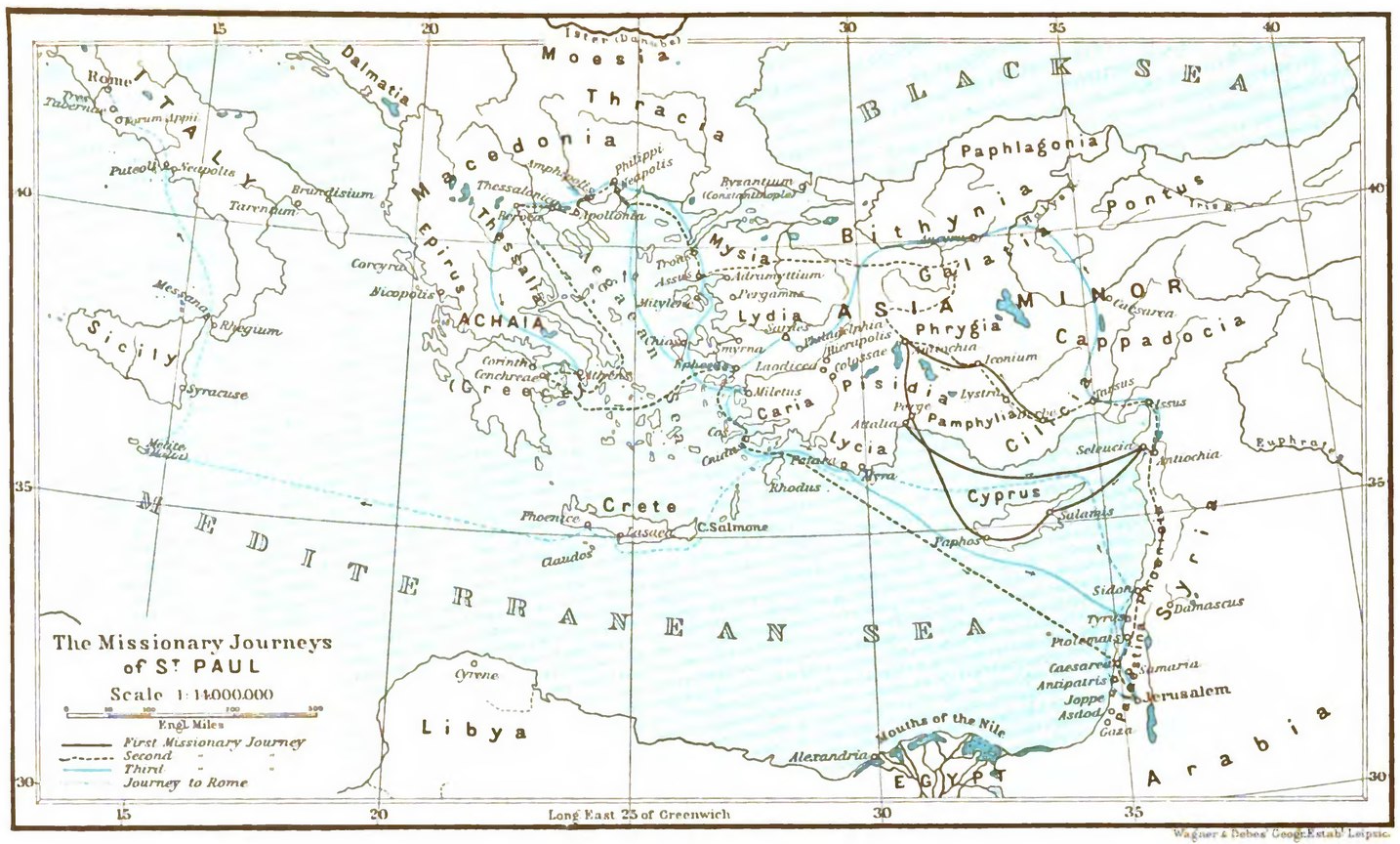
Why Crete matters
Fair Havens, the warning, and the storm
Acts 27:7-21, in the order it happens
Read Acts 27:7-21, in the order it happens
- The ship comes to the lee of CreteActs 27:7After sailing slowly for many days, we arrived off Cnidus. When the wind impeded us, we sailed to the lee of Crete, opposite Salmone.
- Fair Havens, near the town of LaseaActs 27:8After we had moved along the coast with difficulty, we came to a place called Fair Havens, near the town of Lasea.
- Paul warns of disaster aheadActs 27:10“Men, I can see that our voyage will be filled with disaster and great loss, not only to ship and cargo, but to our own lives as well.”
- The centurion follows the pilot and owner insteadActs 27:11But contrary to Paul’s advice, the centurion was persuaded by the pilot and by the owner of the ship.
- They try to reach Phoenix, a better Cretan harborActs 27:12Since the harbor was unsuitable to winter in, the majority decided to sail on, if somehow they could reach Phoenix to winter there. Phoenix was a harbor in Crete facing both southwest and northwest.
- A gentle wind, then the NortheasterActs 27:14But it was not long before a cyclone called the Northeaster swept down across the island.
- Paul reminds them of his warningActs 27:21After the men had gone a long time without food, Paul stood up among them and said, “Men, you should have followed my advice not to sail from Crete. Then you would have averted this disaster and loss.
Titus 1:5 shows Crete was not only a stop on Paul's voyage. He had left Titus there to finish organizing churches already begun on the island.
Paul's Shipwreck: the full studyWhat happened here, in order
in the order the canon tells it
- Cretans at Pentecost hear the wonders of GodActs 2:11both Jews and converts to Judaism; Cretans and Arabs—we hear them declaring the wonders of God in our own tongues!”
- The ship sails to the lee of CreteActs 27:7After sailing slowly for many days, we arrived off Cnidus. When the wind impeded us, we sailed to the lee of Crete, opposite Salmone.
- They reach Fair Havens, near LaseaActs 27:8After we had moved along the coast with difficulty, we came to a place called Fair Havens, near the town of Lasea.
- The season for safe sailing has passedActs 27:9By now much time had passed, and the voyage had already become dangerous because it was after the Fast. So Paul advised them,
- Paul's warning of disaster and lossActs 27:10“Men, I can see that our voyage will be filled with disaster and great loss, not only to ship and cargo, but to our own lives as well.”
- The majority decide to try for PhoenixActs 27:12Since the harbor was unsuitable to winter in, the majority decided to sail on, if somehow they could reach Phoenix to winter there. Phoenix was a harbor in Crete facing both southwest and northwest.
- A gentle south wind, and they hug Crete's coastActs 27:13When a gentle south wind began to blow, they thought they had their opportunity. So they weighed anchor and sailed along, hugging the coast of Crete.
- The Northeaster sweeps downActs 27:14But it was not long before a cyclone called the Northeaster swept down across the island.
- Paul reminds them: you should not have sailed from CreteActs 27:21After the men had gone a long time without food, Paul stood up among them and said, “Men, you should have followed my advice not to sail from Crete. Then you would have averted this disaster and loss.
- Paul left Titus in Crete to set things in orderTitus 1:5The reason I left you in Crete was that you would set in order what was unfinished and appoint elders in every town, as I directed you.
- What an elder must hold toTitus 1:9He must hold firmly to the faithful word as it was taught, so that he can encourage others by sound teaching and refute those who contradict it.
- Households undermined for dishonorable gainTitus 1:11who must be silenced. For the sake of dishonorable gain, they undermine entire households and teach things they should not.
- The Cretan prophet's own wordsTitus 1:12As one of their own prophets has said, “Cretans are always liars, evil beasts, lazy gluttons.”
- Paul calls the testimony true, and calls for sound faithTitus 1:13This testimony is true. Therefore rebuke them sternly, so that they will be sound in the faith
The voices
each quoted from the work named
Cretans - One island seems to be mentioned for all. The wonderful works of God - Probably those which related to the miracles, death, resurrection, and ascension of Christ, together with the effusion of his Spirit, as a fulfilment of his promises, and the glorious dispensations of Gospel grace.
For this cause left I thee in Crete,.... Not in his voyage to Rome, Act 27:7 but rather when he came from Macedonia into Greece, Act 20:2. Crete is an island in the Mediterranean sea, now called Candy;
Crete was a country without wild beasts. Epimenides' sarcasm was that its human inhabitants supplied the place of wild beasts.
1 more teacher on these versesOecumenius
One of them, a prophet of their own, said: "Cretans are always liars, evil beasts, lazy gluttons." It is asked for what reason Paul brought forward the testimony of the Greeks, and commended it, especially since it was not rightly said?
Crete in Scripture
5 verses name it, in 2 books
Open a book to read its mentions here. Text: Berean Standard Bible.
Old TestamentNew Testamentsegment width = share of mentions
New Testament2 books · 5 mentions
Acts4 mentions
- Acts 27:7After sailing slowly for many days, we arrived off Cnidus. When the wind impeded us, we sailed to the lee of Crete, opposite Salmone.
- Acts 27:12Since the harbor was unsuitable to winter in, the majority decided to sail on, if somehow they could reach Phoenix to winter there. Phoenix was a harbor in Crete facing both southwest and northwest.
- Acts 27:13When a gentle south wind began to blow, they thought they had their opportunity. So they weighed anchor and sailed along, hugging the coast of Crete.
- Acts 27:21After the men had gone a long time without food, Paul stood up among them and said, “Men, you should have followed my advice not to sail from Crete. Then you would have averted this disaster and loss.
Common questions
Who were the Cretans at Pentecost?
Acts 2:11 lists Cretans among the crowd of God-fearing Jews from every nation who heard the apostles declaring the wonders of God in their own languages. John Wesley's Explanatory Notes take one island as standing for the wider group of visitors present that day. Scripture names them only in that one verse and says nothing further about them there.
Why did the ship stop at Crete, and why did the centurion ignore Paul's warning?
Acts 27:7-8 has the ship driven to Crete's coast by contrary winds, reaching a harbor called Fair Havens. Paul warned that sailing on would end in disaster, but the centurion trusted the pilot and the ship's owner instead, and the majority chose to try reaching a better harbor, Phoenix, to spend the winter. A storm called the Northeaster then drove them off course before they could reach it.
What was Titus left in Crete to do?
Titus 1:5 states the reason plainly: Paul left Titus in Crete to set in order what was unfinished and to appoint elders in every town. John Gill's Exposition places this apart from Paul's later voyage to Rome recorded in Acts 27, reading it instead as an earlier visit when Paul came from Macedonia into Greece. The letter goes on to list what an elder must be and warns against those undermining households for dishonorable gain.
Who is the "prophet of their own" quoted in Titus 1:12, and how should that verse be read?
Readers differ; the positions are named
Titus 1:12 names him only as one of the Cretans' own prophets, without giving his name. Christian tradition commonly identifies him with the Cretan poet Epimenides, and Jamieson, Fausset and Brown's Commentary reads the line about evil beasts as sarcasm, since Crete had no native wild beasts. Paul calls the testimony true and applies it in context to specific false teachers troubling the churches, named in the verses just before it, not as a verdict on the Cretan people as a whole.
Sources cited
- OpenBible.info Bible Geocoding: Creteread 2026-08-20The coordinates on this page. Used under CC-BY with attribution to OpenBible.info.
- Berean Standard BibleAll Scripture text on this page, from the site's own verse store. Public domain since 2023.
- Jamieson, Fausset & Brown, Commentary Critical and Explanatory on the Whole Bible (1871)Public domain, CCEL edition.
- John Wesley, Explanatory Notes upon the New Testament (1755)Public domain, CCEL edition.
- Oecumenius, Commentary on the Pastoral Epistles (6th century)Public domain.
- John Gill, Exposition of the New Testament (1746-1748)Public domain.
Keep studying
On this page
Lives that run through it1
Doorway2
Keep this page