
Zechariah 5:9
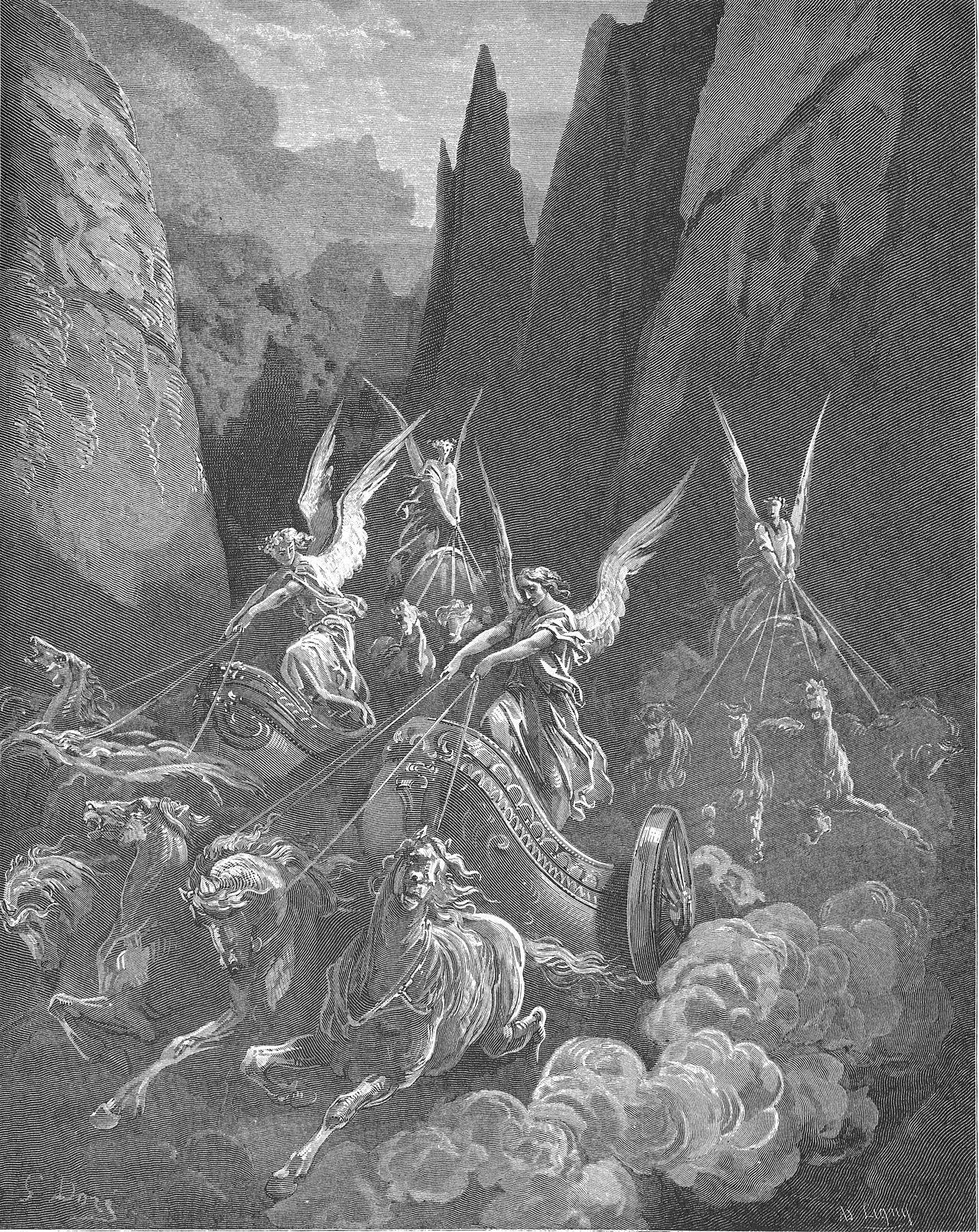
in Zechariah 5Then I lifted up my eyes and saw two women approaching, with the wind in their wings. Their wings were like those of a stork, and they lifted up the basket between heaven and earth.
BSB
The same verse in ASV and KJV ▾
ASV
Then lifted I up mine eyes, and saw, and, behold, there came forth two women, and the wind was in their wings; now they had wings like the wings of a stork; and they lifted up the ephah between earth and heaven.
KJV
Then lifted I up mine eyes, and looked, and, behold, there came out two women, and the wind was in their wings; for they had wings like the wings of a stork: and they lifted up the ephah between the earth and the heaven.
⋯
This verse in Zechariah 5
Commentary
8 notes on this verse(Verse 9 and following) And I lifted up my eyes, and I saw, and behold, two women coming forth, and a spirit was on their wings, and they had wings like the wings of a kite, and they lifted up an amphora between the earth and the sky. And I said to the angel who spoke to me: Where are these taking the amphora? And he said to me: To build a house for it in the land of Shinar, and it will be established and placed there upon its base.
This site's exposition
there came out two women, and the wind was in their wings
on Zechariah 5:9-11
Two women with the wings of a stork, an unclean bird by the law's own list, lift the ephah between earth and heaven and carry it away to Shinar, to build it a house and set it on its own base. Shinar is the plain of Genesis eleven, the tower's own ground, and Keil reads the deportation as wickedness returned to the land where organized rebellion against God first took a name for itself, exiled from the covenant land back to the world it came from. The vision closes without further comment: no verdict is drawn on any later application, only the sign that the removal is deliberate, carried, and given a settled home of its own.
The record, by era
The Puritans and the Awakening3 voices
There came out - From the same place whence the ephah came. Their wings - They had wings, like the wings of storks, large and strong, and flew before the wind with great swiftness. The judgments came thus flying, and so bore away with them those that were incorrigible.
And he gives him this account of it: I see a flying roll, and as near as he can guess by his eye it is twenty cubits long (that is, ten yards) and ten cubits broad, that is, five yards. The scriptures of the Old Testament and the New are rolls, in which God has written to us the great things of his law and gospel. Christ is the Master of the rolls.
Then lifted I up mine eyes, and looked,.... This is not a new vision, but a continuation of the former, as appears from the "ephah" seen in it: and, behold, there came out two women; out of the same place the "ephah" did.
The Nineteenth Century2 voices
A commentator
Albert Barnes1798–1870
Notes, Explanatory and Practical, on the Old and New Testaments (1832-1869)
There came out two women - It may be that there may be no symbol herein, but that he names women because it was a woman who was so carried; yet their wings were the wings of an unclean bird, strong, powerful, borne by a force not their own; with their will, since they flew; beyond their will, since the wind was in their wings; rapidly, inexorably, irresistibly, they flew and bore the Ephah between heaven and earth. No earthly power could reach or rescue it. God would not.
A commentator
Jamieson, Fausset & Brown1802–1910
Commentary Critical and Explanatory on the Whole Bible (1871)
The "stork" has long and wide wings, for which reason it is specified; also it is a migratory bird. The "wind" helps the rapid motion of the wings. The being "lifted up between heaven and earth" implies open execution of the judgment before the eyes of all.
1 more voice on this verse
The Nineteenth Century1 voice
There came out two women - As the one woman represented the impiety of the Jewish nation; so these two women who were to carry the ephah, in which the woman Iniquity was shut up, under the weight of a talent of lead, may mean the desperate Unbelief of the Jews in rejecting the Messiah; and that Impiety, or universal corruption of manners, which was the consequence of their unbelief, and brought down the wrath of God upon them. The strong wings, like those of a stork, may point out the power and swiftness with which Judea was carried on to fill up the measure of her iniquity, and to meet the punishment which she deserved. Between the earth and the heaven - Sins against God and Man, sins which heaven and earth contemplated with horror. Or the Babylonians and Romans may be intended by the two women who carried the Jewish ephah to its final punishment. The Chaldeans ruined Judea before the advent of our Lord; the Romans, shortly after.
The words behind it
20 Hebrew wordsEvery Hebrew word of this verse in the order it stands, with what it means and the door to its own study. The last column counts the times a word stands in the whole Bible: the rarer the word, the more the places it appears belong together.
| Hebrew | Sound | Meaning | Word study | In the Bible |
|---|---|---|---|---|
| וָאֶשָּׂ֨א | vaesa' | and I lifted up | H5375 → | 656 times |
| עֵינַ֜י | ʾeinai | eyes my | H5869 → | 887 times |
| וָאֵ֗רֶא | vaere' | and I saw | H7200 → | 1300 times |
| וְהִנֵּה֩ | vehineh | and there! | H2009 → | 843 times |
| שְׁתַּ֨יִם | shetayim | two | H8147 → | 768 times |
| נָשִׁ֤ים | nashim | women | H802 → | 781 times |
| יֽוֹצְאוֹת֙ | yotzot | [were] going forth | H3318 → | 1067 times |
| וְר֣וּחַ | veruach | and a wind | H7307 → | 378 times |
| בְּכַנְפֵיהֶ֔ם | bekhanfeihem | [was] in wings their | H3671 → | 109 times |
| וְלָהֵ֥נָּה | velahenah | and [belonged] to them | ||
| כְנָפַ֖יִם | khenafayim | wings | H3671 → | 109 times |
| כְּכַנְפֵ֣י | kekhanfei | like [the] wings of | H3671 → | 109 times |
| הַחֲסִידָ֑ה | hachasidah | <the> stork | H2624 → | |
| וַתִּשֶּׂ֙אנָה֙ | vatisenah | and they lifted up | H5375 → | 656 times |
| אֶת־ | ʾet- | <obj.> | H853 → | 10935 times |
| הָ֣אֵיפָ֔ה | haeifah | the ephah | H374 → | 40 times |
| בֵּ֥ין | bein | between | H996 → | 407 times |
| הָאָ֖רֶץ | haaretz | the earth | H776 → | 2504 times |
| וּבֵ֥ין | uvein | and between | H996 → | 407 times |
| הַשָּׁמָֽיִם׃ | hashamayim | the heavens | H8064 → | 421 times |
וָאֶשָּׂ֨אand I lifted up
vaesa'H5375 →656 times
עֵינַ֜יeyes my
ʾeinaiH5869 →887 times
וָאֵ֗רֶאand I saw
vaere'H7200 →1300 times
וְהִנֵּה֩and there!
vehinehH2009 →843 times
שְׁתַּ֨יִםtwo
shetayimH8147 →768 times
נָשִׁ֤יםwomen
nashimH802 →781 times
יֽוֹצְאוֹת֙[were] going forth
yotzotH3318 →1067 times
וְר֣וּחַand a wind
veruachH7307 →378 times
בְּכַנְפֵיהֶ֔ם[was] in wings their
bekhanfeihemH3671 →109 times
וְלָהֵ֥נָּהand [belonged] to them
velahenah
כְנָפַ֖יִםwings
khenafayimH3671 →109 times
כְּכַנְפֵ֣יlike [the] wings of
kekhanfeiH3671 →109 times
הַחֲסִידָ֑ה<the> stork
hachasidahH2624 →
וַתִּשֶּׂ֙אנָה֙and they lifted up
vatisenahH5375 →656 times
אֶת־<obj.>
ʾet-H853 →10935 times
הָ֣אֵיפָ֔הthe ephah
haeifahH374 →40 times
בֵּ֥יןbetween
beinH996 →407 times
הָאָ֖רֶץthe earth
haaretzH776 →2504 times
וּבֵ֥יןand between
uveinH996 →407 times
הַשָּׁמָֽיִם׃the heavens
hashamayimH8064 →421 times
A shaded row is a word that stands 400 times or fewer in the Bible.
The walk
8 stopsEach card is a verse this one points to, and under it the verses that one points to in turn. Where several paths arrive at the same place, that place is listed first: the text keeps returning to it.
Through
Matthew 24:28Wherever there is a carcass, there the vultures will gather.
it leads to
- Luke 17:37
“Where, Lord?” they asked. Jesus answered, “Wherever there is a carcass, there the vultures will gather.”
- Job 39:27–30
Does the eagle soar at your command and make his nest on high?
- Luke 17:37
Through
Hosea 8:1Put the ram’s horn to your lips! An eagle looms over the house of the LORD, because the people have transgressed My covenant and rebelled against My law.
it leads to
- Deuteronomy 28:49
The LORD will bring a nation from afar, from the ends of the earth, to swoop down upon you like an eagle—a nation whose language you will not understand,
Reached by 2 separate paths from here.
- Hosea 6:7
But they, like Adam, have transgressed the covenant; there they were unfaithful to Me.
- Jeremiah 4:13
Behold, he advances like the clouds, his chariots like the whirlwind. His horses are swifter than eagles. Woe to us, for we are ruined!
- Deuteronomy 28:49
Through
Deuteronomy 28:49The LORD will bring a nation from afar, from the ends of the earth, to swoop down upon you like an eagle—a nation whose language you will not understand,
it leads to
- Lamentations 4:19
Those who chased us were swifter than the eagles in the sky; they pursued us over the mountains and ambushed us in the wilderness.
- Jeremiah 49:22
Look! An eagle will soar and swoop down, spreading its wings over Bozrah. In that day the hearts of Edom’s mighty men will be like the heart of a woman in labor.
- Jeremiah 48:40
For this is what the LORD says: “Behold, an eagle swoops down and spreads his wings against Moab.
- Lamentations 4:19
About Zechariah
This page draws on 9 works. Open the list of works
This page draws on Adam Clarke, Commentary on the Bible; Albert Barnes, Notes, Explanatory and Practical, on the Old and New Testaments (1832-1869); Carl Friedrich Keil, The Twelve Minor Prophets; Edward Bouverie Pusey, The Minor Prophets: A Commentary; Jamieson, Fausset & Brown, Commentary Critical and Explanatory on the Whole Bible; Jerome, Commentary on Zechariah; John Gill, Exposition of the Old Testament (1748-1763); John Wesley, Explanatory Notes upon the Old Testament and Matthew Henry, Commentary on the Whole Bible.