
Psalms 47:4
in Psalms 47He chooses our inheritance for us, the pride of Jacob, whom He loves. Selah
BSB
The same verse in ASV and KJV ▾
ASV
He chooseth our inheritance for us, The glory of Jacob whom he loved. [Selah
KJV
He shall choose our inheritance for us, the excellency of Jacob whom he loved. Selah.
⋯
This verse in Psalms 47
Commentary
15 notes on this verseBut what does it profit me, if the seed of Abraham, "which is Christ," should possess "the cities of his enemies for an inheritance" and should not possess my city? If in my city, that is, in my soul, which is "the city of the great king," neither his laws nor his ordinances should be observed?
This site's exposition
He subdues nations beneath us
on Psalms 47:3-4
He subdues nations beneath us puts the conquest in God's own hands. What He chooses is an inheritance, the pride of Jacob, whom He loves, and Henry read the land as the gift of that choosing love. Selah closes the stanza.
This site's exposition
the pride of Jacob
Barnes noted that the Septuagint gives the pride of Jacob as his beauty. Augustine read whom He loves through the choice of Jacob over Esau in Genesis 25:23. Spurgeon would leave God to choose his whole inheritance.
The record, by era
The Church Fathers3 voices
The God of all, who subjected kings to us and gave us control of all the nations, and in addition to that entrusts the beauty and excellence of Jacob to us—not all the Jewish people, who are named for Jacob, in fact, but "the beauty …
Someone may be bewildered and uncertain, and say, "So how is it that the Jews do not believe today?" … Listen to what follows; he added, "the beauty of Jacob, which he loved." Here in fact he seems to me to be referring to the believers, as Paul indicated in saying, "It is not, however, as though the word of God had failed: not all of Israel belong to Israel; … it is not the children of the flesh who are children of God, but the children of the promise who are counted as descendants." Now, the believers are rightly spoken of as the people's beauty; what could be more appealing, after all, than those who have come to faith?
"He has chosen an inheritance for us, the excellency of Jacob, whom He loved" [Psalm 47:4]. A certain beauty of Jacob He has chosen for our inheritance. Esau and Jacob were two brothers; in their mother's womb both struggled, and by this struggle their mother's bowels were shaken; and while they two were yet therein, the younger was elected and preferred to the elder, and it was said, "Two peoples are in your womb, and the elder shall serve the younger." [Genesis 25:23] Among all nations is the elder, among all nations the younger; but the younger is in good Christians, elect, godly, faithful; the elder in the proud, unworthy, sinful, stubborn, defending rather than confessing their sins: as was also the very people of the Jews, "being ignorant of God's righteousness, and going about to establish their own righteousness." [Romans 10:3] But for that it is said, "The elder shall serve the younger;" it is manifest that under the godly are subdued the ungodly, under the humble are subdued the proud. Esau was born first, and Jacob was born last; but he who was last born, was preferred to the first-born, who through gluttony lost his birthright. So you have it written, [Genesis 25:30-34] He longed for the pottage, and his brother said to him, If you will that I give it you, give me your birthright. He loved more that which carnally he desired, than that which spiritually by being born first he had earned: and he laid aside his birthright, that he might eat lentils. But lentils we find to be the food of the Egyptians, for there it abounds in Egypt. Whence is so magnified the lentil of Alexandria, that it comes even to our country, as if here grew no lentil. Therefore by desiring Egyptian food he lost his birthright. […]
The Medieval Church1 voice
"He has chosen for us his inheritance." Here another benefit of the bestowal of goods is set forth. Where it should be noted that election implies the acceptance of one thing over another. Now the election of God can be understood from a twofold perspective. …
The Puritans and the Awakening1 voice
Inheritance - The presence and worship, and blessing of God. This God had chosen for the Israelites and resolved to chuse or set apart for the Gentiles. Of Jacob - Of the people of Jacob or Israel, who are frequently called Jacob, for these did actually enjoy the presence of God in his sanctuary.
7 more voices on this verse
The Puritans and the Awakening2 voices
He knows what is good for me better than I do for myself, and therefore I will have no will of my own but what is resolved into his." Exhortation to Praise God. 5 God is gone up with a shout, the L ORD with the sound of a trumpet. 6 Sing praises to God, sing praises: sing praises unto our King, sing praises.
quarantine:debris (2026-07-29) — odd-straight-quotes
He shall choose our inheritance for us,....
The Nineteenth Century5 voices
While as yet we see not all things put under him, we are glad to put ourselves and our fortunes at his disposal. He shall choose our inheritance for us. We feel his reign to be so gracious that we even now ask to be in the fullest degree the subjects of it. We submit our will, our choice, our desire, wholly to him. Our heritage here and hereafter we leave to him, let him do with us as seemeth him good. The excellency of Jacob whom he loved.
While as yet we see not all things put under him, we are glad to put ourselves and our fortunes at his disposal. He shall choose our inheritance for us. We feel his reign to be so gracious that we even now ask to be in the fullest degree the subjects of it. We submit our will, our choice, our desire, wholly to him. Our heritage here and hereafter we leave to him, let him do with us as seemeth him good. The excellency of Jacob whom he loved. He gave his ancient people their portion, he will give us ours, and we ask nothing better; this is the most spiritual and real manner of clapping our hands because of his sovereignty, namely, to leave all our affairs in his hands, for then our hands are empty of all care for self, and free to be used in his honour. He was the boast and glory of Israel, he is and shall be ours. He loved his people and became their greatest glory; he loves us, and he shall be our exceeding joy. As for the latter days, we ask nothing better than to stand in our appointed lot, for if we have but a portion in our Lord Jesus, it is enough for our largest desires. Our beauty, our boast, our best treasure, lies in having such a God to trust in, such a God to love us. Selah. Yes, pause, ye faithful songsters. Here is abundant room for holy meditation—
A commentator
Charles Spurgeon1834–1892
The New Park Street Pulpit, Sermon No. 33: “A Wise Desire” (lightly modernized text, CCEL edition) (1855)
proposed
THE CHRISTIAN IS ALWAYS pleased and delighted when he can see Christ in the Scriptures. If he can but detect the footstep of his lord, and discover that the sacred writers are making some reference to him, however indistinct or dark he will rejoice there at: for all the Scriptures are nothing except as we find Christ in them. St.
A commentator
Charles Spurgeon1834–1892
The New Park Street Pulpit, Sermon No. 33: “A Wise Desire” (lightly modernized text, CCEL edition) (1855)
proposed
THE CHRISTIAN IS ALWAYS pleased and delighted when he can see Christ in the Scriptures. If he can but detect the footstep of his lord, and discover that the sacred writers are making some reference to him, however indistinct or dark he will rejoice there at: for all the Scriptures are nothing except as we find Christ in them. St. Austin says, “The Scriptures are the swaddling bands of the man-child—Christ Jesus, and were all intended to be hallowed garments in which to wrap him “So they are; and it is our pleasant duty to lift the veil, or remove the garment of Jesus and so behold him in his person, in his nature, or his offices. Now, this text is concerning Jesus Christ—he it is who is to “choose our inheritance for us,” he in whom dwelleth all the treasures of wisdom and knowledge is the great Being who is selected as the head of predestination—to choose our lot and our portion, and fix our destiny. Verily, beloved brethren, you and I can rejoice in this great fact, that our Saviour chooses for us. For were we all to be assembled together in some great plain, as Israel was of old, to elect for ourselves a king, we should not propose a second candidate. There would be one who stands like Saul, the son of Kish, head and shoulders taller than all the rest, whom we should at once select to be our king and ruler of Providence for us. We would not ask for some prudent sage or deeply taught philosopher; we would not choose the most experienced senior; but, without a single moment’s hesitation, directly we saw Jesus Christ, in the majesty of his person, we should say, in the words of the Psalmist, He who redeemed us, he who ransomed us, he who loved us—“He shall choose our inheritance for us.” I remember once going to a chapel where this happened to be the text, and the good man who occupied the pulpit was more than a little of an Arminian.
A commentator
Albert Barnes1798–1870
Notes, Explanatory and Practical, on the Old and New Testaments (1832-1869)
proposed
He shall choose our inheritance for us - He has chosen or selected the land which we inherit. Of all the countries which compose the world, he has chosen “this” to be the inheritance of his own people, or the place where they should dwell. The thought in this verse is based on the idea so common in the writings of the Hebrews, that their country was the glory of all lands - the place of all on earth most desirable to dwell in. It is in view of this fact that they are here called on to praise God, and to rejoice in him. The excellency of Jacob - literally, “the pride - גאון gâ'ôn - of Jacob.” Septuagint, “beauty” - καλλονὴν kallonēn. So the Vulgate, “speciem.” The meaning is, that it was a land of which Jacob, the ancestor of the people, might be proud, or which he did boast of. It was ever regarded as an honor among the Jews that they dwelt in a land which had been the abode of the prophets; and especially was anything regarded as of value that could be traced to Jacob; that bad been once in his possession; or that could be regarded as his gift. Compare Joh 4:12. Whom he loved - As one of the patriarchs. Perhaps special allusion is here made to “Jacob” rather than to Abraham and Isaac, because the land came actually into the possession of the Hebrew people in the time of Jacob’s sons. It was divided among the descendants of his sons, the twelve tribes, bearing their names; and thus Jacob was most naturally referred to as having been in possession of the land. Abraham and Isaac dwelt in the land as strangers and pilgrims Heb 11:9-10, Heb 11:13, having no possession there, not even of a burying-place except as they purchased it (compare Gen 23:12-16); and the land actually came into the possession of the nation only in the family of Jacob.
How the passage was read
What the Jewish commentators add
On the verses either side of this one
He shall choose..for us and restore us to its midst. Then He will be exalted with the trumpet blast and the sound of the shofar that we will sound before Him over the burnt offerings and the peace offerings, and we will say, “Sing to God, etc.”
This section is reception history: how the passage was read and kept in the Jewish tradition. Where a reading parts from an essential of the Christian faith, the section says so at that point.
Texts and citation data: Sefaria; each excerpt follows its version’s licence. 5 further sources are cited on this chapter that carry no English text this site may quote or only restate the verse.
The words behind it
10 Hebrew wordsEvery Hebrew word of this verse in the order it stands, with what it means and the door to its own study. The last column counts the times a word stands in the whole Bible: the rarer the word, the more the places it appears belong together.
| Hebrew | Sound | Meaning | Word study | In the Bible |
|---|---|---|---|---|
| יִבְחַר־ | yivchar- | he chooses | H977 → | 171 times |
| לָ֥נוּ | lanu | for us | ||
| אֶת־ | ʾet- | <obj.> | H853 → | 10935 times |
| נַחֲלָתֵ֑נוּ | nachalatenu | inheritance our | H5159 → | 222 times |
| אֶ֥ת | ʾet | <obj.> | H853 → | 10935 times |
| גְּא֨וֹן | geon | [the] pride of | H1347 → | |
| יַעֲקֹ֖ב | yaako | Jacob | H3290 → | 350 times |
| אֲשֶׁר־ | ʾasher- | whom | H834 → | 5497 times |
| אָהֵ֣ב | ʾahev | he loved | H157 → | 211 times |
| סֶֽלָה׃ | selah | Selah | H5542 → | 74 times |
יִבְחַר־he chooses
yivchar-H977 →171 times
לָ֥נוּfor us
lanu
אֶת־<obj.>
ʾet-H853 →10935 times
נַחֲלָתֵ֑נוּinheritance our
nachalatenuH5159 →222 times
אֶ֥ת<obj.>
ʾetH853 →10935 times
גְּא֨וֹן[the] pride of
geonH1347 →
יַעֲקֹ֖בJacob
yaakoH3290 →350 times
אֲשֶׁר־whom
ʾasher-H834 →5497 times
אָהֵ֣בhe loved
ʾahevH157 →211 times
סֶֽלָה׃Selah
selahH5542 →74 times
A shaded row is a word that stands 400 times or fewer in the Bible.
The walk
8 stopsEach card is a verse this one points to, and under it the verses that one points to in turn. Where several paths arrive at the same place, that place is listed first: the text keeps returning to it.
Through
1 Peter 1:4and into an inheritance that is imperishable, undefiled, and unfading, reserved in heaven for you,
it leads to
- Revelation 21:27
But nothing unclean will ever enter it, nor anyone who practices an abomination or a lie, but only those whose names are written in the Lamb’s Book of Life.
- Hebrews 9:15
Therefore Christ is the mediator of a new covenant, so that those who are called may receive the promised eternal inheritance, now that He has died to redeem them from the transgressions committed under…
- 1 Peter 5:4
And when the Chief Shepherd appears, you will receive the crown of glory that will never fade away.
- 2 Timothy 4:8
From now on there is laid up for me the crown of righteousness, which the Lord, the righteous Judge, will award to me on that day—and not only to me, but to all who…
- Matthew 25:34
Then the King will say to those on His right, ‘Come, you who are blessed by My Father, inherit the kingdom prepared for you from the foundation of the world.
- Revelation 21:27
Through
Hosea 14:4I will heal their apostasy; I will freely love them, for My anger has turned away from them.
it leads to
- Isaiah 57:18
I have seen his ways, but I will heal him; I will guide him and restore comfort to him and his mourners,
- Jeremiah 3:22
“Return, O faithless children, and I will heal your faithlessness.” “Here we are. We come to You, for You are the LORD our God.
- Isaiah 12:1
In that day you will say: “O LORD, I will praise You. Although You were angry with me, Your anger has turned away, and You have comforted me.
- Isaiah 57:18
Where this verse is studied
On this page
Studies1
About Psalms
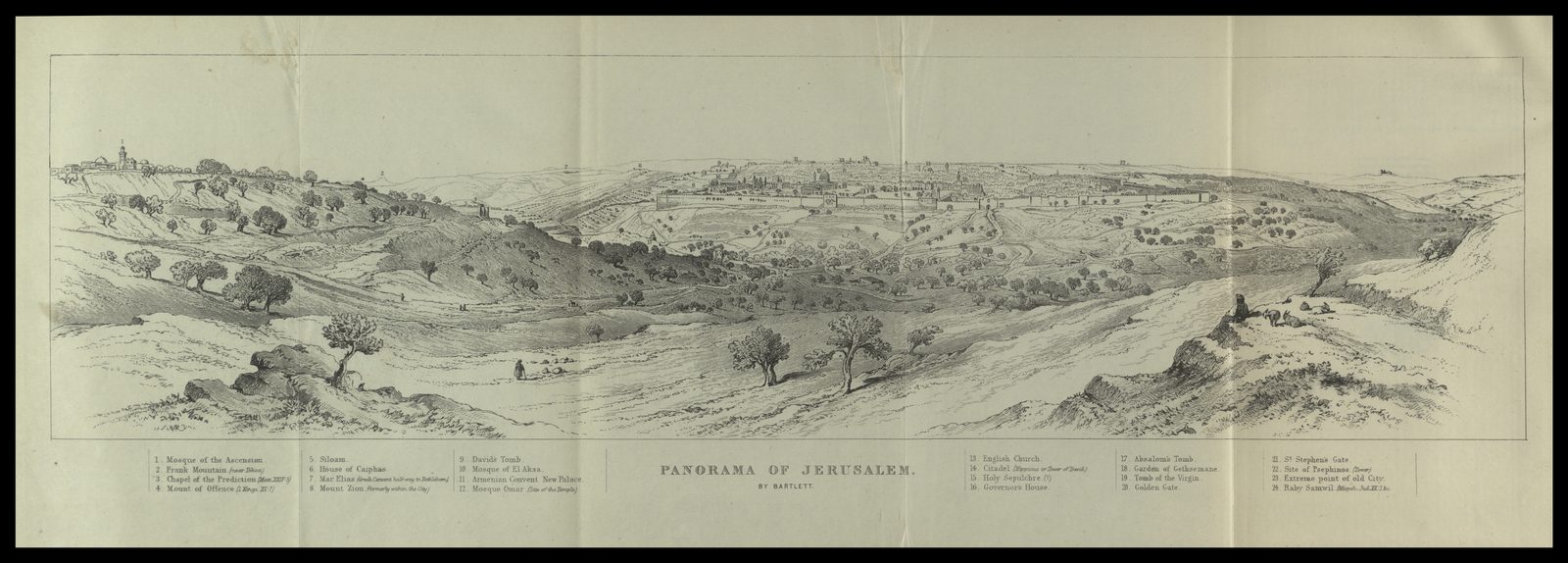
Who and where
1 name in this verse with a page on the site.
This page draws on 14 works. Open the list of works
This page draws on Albert Barnes, Notes on the Book of Psalms; Albert Barnes, Notes, Explanatory and Practical, on the Old and New Testaments; Albert Barnes, Notes, Explanatory and Practical, on the Old and New Testaments (1832-1869); Augustine of Hippo, Exposition on Psalm 47; Charles Spurgeon, The Treasury of David; Charles Spurgeon, The Treasury of David, Vol. 2; Charles Spurgeon, The New Park Street Pulpit, Sermon No. 33: “A Wise Desire” (lightly modernized text, CCEL edition); John Chrysostom, COMMENTARY ON THE PSALMS 47:5; John Gill, Exposition of the Old Testament (1748-1763); John Wesley, Explanatory Notes upon the Old Testament; Matthew Henry, Commentary on the Whole Bible; Origen of Alexandria, HOMILIES ON PSALMS 9:3; Theodoret of Cyrus, COMMENTARY ON THE PSALMS 47:2 and Thomas Aquinas, Exposition on the Psalms of David.