
Psalm 93
5 verses · Psalm of the LORD's kingship
The LORD reigns! He is robed in majesty; the LORD has clothed and armed Himself with strength. The world indeed is firmly established; it cannot be moved.
Introduction
Author unstated, the King above the Floods, Book 4: The LORD reigns, Poetry, Psalms Overview.
This short psalm has no title in the Hebrew and names no writer. It opens a group of psalms in the fourth book that announce the LORD as King. It was sung in a small nation surrounded by larger ones, in a country where dry streambeds could flood overnight and the sea was feared. The psalm sets the King above all that noise. Listen for the sound rising in its middle, repeated three times, and for the quiet close, where the King's word and His house are named as the things that last.
Context
- Who
- Worshippers who had seen a dry riverbed fill in a night and had heard the sea from the coast road
- What
- A short hymn announcing that the LORD reigns, robed as a king and seated above the floods.
- Where
- The temple, in a country whose people feared the sea and lived by winter torrents
- When
- Undated and untitled in the Hebrew; the ancient Greek translation gives it a title for the day before the Sabbath.
- Why
- To assure a small nation that no power of land or sea rises higher than God's throne.
Historical context
The psalm dresses God as a king taking his seat, and both verbs of verse 1 are clothing verbs. A hearer knew what the moment looked like, since an Israelite king was robed and belted before he sat to judge. The floodwaters of verse 3 were a known danger: the wadis of Judah ran dry for most of the year and filled in hours when the winter rain came off the hills, taking anything in the channel with them. In the stories of the surrounding nations the sea stood for the power that had to be beaten before the world could stand, and the psalm sets the LORD above the roar. The house of verse 5 is the temple.
Significance
To people whose nation was small and whose neighbours were large, the psalm said that the noise of the nations reached no higher than the noise of the sea, which is to say not as high as the throne. The last verse turned the psalm to use: a God the waters cannot shake has also spoken, and what He said is reliable.
This chapter in Jewish lifeWhat this chapter is in Jewish life and reading.
What is done
The Jewish traditions preserved in the Mishnah record this as the temple psalm for the sixth day of the week, the day on which the work of creation was finished and the world stood complete (Mishnah Tamid 7:4, Danby translation, as this site records it at scripts/data/historical-context/ch3-psalms-b.mjs).
How it is read
The psalm stands in the group this site calls the enthronement psalms, Psalms 93 and 95 to 99, the psalms that say the LORD reigns (src/components/book/dossier-content/psalms-structure.ts). That is a statement about the collection rather than about any service, and it is given here as one.
Rashi reads the opening as a sentence about the future rather than the present. On the words that the Lord has reigned he writes that "they will say in the future", and on the world being established that "when He reigns, the earth will rejoice" (Rashi on Psalms 93:1:1 and 93:1:2, Rashi on Psalms, The Judaica Press complete Tanach with Rashi, translated by A. J. Rosenberg, CC-BY).
The rivers of verse 3 are read as enemies and the verse as a complaint. Rashi calls it "an expression of a cry and a plaint" and takes the floodwaters for the nations who raise their voice against God, and he answers them from verse 4, where the Lord is mightier than the breakers of the sea (Rashi on Psalms 93:3:1 and 93:4:1, same edition). The house of verse 5 is the temple, and Rashi reads the testimonies as what the prophets promised concerning it (Rashi on Psalms 93:5:1).
Radak reads the same verse on the vowel and hears a promise of permanence in it, that the house will be holiness for length of days "so that it will no longer be destroyed" (Radak on Psalms 93:5:2, Radak on Psalms, Sefaria Community Translation, CC0). Ibn Ezra, Metzudat David, Malbim and Radak carry sixteen further comments on this short chapter for which Sefaria holds no English version, and they are cited by reference (Ibn Ezra on Psalms 93:1:1, Metzudat David on Psalms 93:1:1, Malbim on Psalms 93:2:1 and the references beside them).
What the rabbis say
The corpus records forty places where the Midrash and the Talmud cite this psalm, thirty three under Midrash and seven under Talmud, and it carries the locator for each one with no text. The Babylonian Talmud cites the first verse twice at Avodah Zarah 24b:16 and 24b:17, verse 2 at Nedarim 39b:9, verse 4 at Beitzah 15b:19 and verse 5 at Sanhedrin 111b:2.
Bereshit Rabbah reads verse 2 at 1:4 and the waters of verses 3 and 4 at 5:1, 5:3 and 28:2. Midrash Tehillim treats the psalm at 93:3, 93:5 and 93:6, and Pesikta DeRav Kahana takes up verse 5 at 25:1. The site reports where the rabbis cite the verse and reports no saying, because the locator carries none.
Sources: The Mishnah, Tamid 7:4, Danby translation, as recorded at scripts/data/historical-context/ch3-psalms-b.mjs, about AD 200; MannaFest, the five books of the Psalter and their collections, at src/components/book/dossier-content/psalms-structure.ts, 2026; Rashi, Rashi on Psalms 93, in The Judaica Press complete Tanach with Rashi, translated by A. J. Rosenberg, CC-BY; Radak, Radak on Psalms 93, Sefaria Community Translation, CC0; Ibn Ezra, Metzudat David and Malbim, their comments on Psalms 93, cited by reference; Sefaria holds no English version; The Midrash and the Talmud, the forty locators on Psalms 93 in scripts/data/sources/sefaria/psalms/93.json.
Psalms 93:1-2
The LORD reigns!: The LORD puts on majesty as a garment and belts strength around Himself, the dress of a king taking his seat. Both verbs are clothing verbs. The world stands firm because that throne was established long ago, and the One on it is from all eternity.
Psalms 93:1
“The Lord reigns gloriously: He is clothed with majesty. The majesty of earthly princes, compared with God's terrible majesty, is but like the glimmerings of a glow-worm compared with the brightness of the sun when he goes forth in his strength. Are the enemies of God's kingdom great and formidable?”
Matthew Henry · Commentary on the Whole Bible (1707-1721)puritan
3 more voices on this verseWhat preachers and commentators have said about this verse, in their own words.
Psalms 93:1
“God is described as a King entering on His reign, and, for robes of royalty, investing Himself with the glorious attributes of His nature. The result of His thus reigning is the durability of the world.”
Jamieson, Fausset & Brown · Commentary Critical and Explanatory on the Whole Bible (1871)reformed
Psalms 93:1
“For he hath established the round world, which shall not be moved. If we understand this world to have been so established by God that it is disturbed by no commotion ever, how is it said elsewhere, 'Heaven and earth shall pass away'? But if heaven and earth shall pass away, how is it said here, He hath established the round world, which shall not be moved?”
Jerome · written before 420 · Homily 70, on Psalm 92 (Alternate Series)patristic
Psalms 93:1
“The Lord reigneth, or Jehovah reigns. Whatever opposition may arise, his throne is unmoved; he has reigned, does reign, and will reign for ever and ever. Whatever turmoil and rebellion there may be beneath the clouds, the eternal King sits above all in supreme serenity; and everywhere he is really Master, let his foes rage as they may. All things are ordered according to his eternal purposes, and his will is done.”
Charles Spurgeon · The Treasury of David, Vol. 4 (1874)Particular Baptist
Your throne was established long ago: The singer turns from speaking about God to speaking to Him. The throne is dated from long ago and the One on it from all eternity, so the reign has no starting point to name. The steadiness of the world in verse 1 rests on this.
Psalms 93:2
“Thy throne is established of old. Though thou mayest just now appear in more conspicuous sovereignty, yet thine is no upstart sovereignty: in the most ancient times thy dominion was secure, yea, before time was thy throne was set up. We often hear of ancient dynasties, but what are they when compared with the Lord? Are they not as the bubble on the breaker, born an instant ago and gone as soon as seen? Thou art from everlasting. The Lord himself is eternal.”
Charles Spurgeon · The Treasury of David, Vol. 4 (1874)Particular Baptist
1 more voice on this verse
Psalms 93:2
“It has been said concerning the Lord's reign and concerning the beauty of his garment, it has been said concerning his strength, it has been said concerning the round world which shall not be moved: now the prophet's speech is directed to the Lord himself, reigning and thundering. And what does he say? Thy throne is prepared; from then thou art, from everlasting. This that he said, He is clothed with strength and hath girded himself, comes down from the lowliness of the flesh: but for the rest, thy kingdom has always been.”
Jerome · written before 420 · Homily 70, on Psalm 92 (Alternate Series)patristic
Psalms 93:3-4
The floodwaters have risen: One Hebrew word, neharot, stands behind floodwaters, rivers and seas, and the verb for lifting up comes three times with it. The noise rises through the whole verse. Verse 4 sets the LORD on high above the roar of many waters and the breakers of the sea.
Psalms 93:3
“The floods have lifted up, 0 Lord. Men have raged like angry waves of the sea, but vain has been their tumult. Observe that the psalmist turns to the Lord when he sees the billows foam, and hears the breakers roar; he does not waste his breath by talking to the waves, or to violent men; but like Hezekiah he spreads the blasphemies of the wicked before the Lord. The floods have lifted up their voice; the floods lift up their waves.”
Charles Spurgeon · The Treasury of David, Vol. 4 (1874)Particular Baptist
1 more voice on this verse
Psalms 93:3
“The floods have lifted up, O Lord, they have lifted up their voices; from the voices of many waters, wonderful are the surgings of the sea. As many words, so many meanings: as many little verses, so many sacraments. The floods have lifted up their voices. This is what is said in another place: 'The rush of the river maketh glad the city of God.' And in another place: 'The rivers shall clap their hands together.' The floods seem to me to be those which water the whole world, the apostolic and prophetic dignities.”
Jerome · written before 420 · Homily 70, on Psalm 92 (Alternate Series)patristic
Above the roar of many waters—: Verse 4 answers the three risings of verse 3 with one word, majestic. The LORD is set on high, above the noise as well as the water. The flood stays below Him.
Psalms 93:4
“The Lord on high is mightier than the noise of many waters. The utmost of their power is to him but a sound and he can readily master it, therefore he calls it a noise by way of contempt. When men combine to overthrow the kingdom of Jesus, plot secretly, and by and by rage openly, the Lord thinks no more of it than of so much noise upon the sea beach. Jehovah, the self existent and omnipotent, cares not for the opposition of dying men, however many or mighty they may be.”
Charles Spurgeon · The Treasury of David, Vol. 4 (1874)Particular Baptist
Your testimonies are fully confirmed: The psalm ends on two fixed things, the LORD's testimonies and the holiness of His house. Verse 2 called the throne established, and verse 5 calls His testimonies confirmed. Matthew Henry read both as ground a worshipper can stand on.
Psalms 93:5
“Thy testimonies are made exceedingly credible. This is what is said in the seventeenth psalm: 'The testimony of the Lord is faithful, giving wisdom to little ones.' To what little ones? 'Father, I give thee thanks, because thou hast hidden these things from the wise and prudent of the world, and hast revealed them to little ones.' Holiness becometh thy house, O Lord. See what he says. Whoever seems to himself to dwell in the house, if he has not holiness, is a stranger to the house, because the house would not have its ornaments.”
Jerome · written before 420 · Homily 70, on Psalm 92 (Alternate Series)patristic
3 more voices on this verse
Psalms 93:5
“Thy testimonies are very sure. As in providence the throne of God is fixed beyond all risk, so in revelation his truth is beyond all question. Other teachings are uncertain, but the revelations of heaven are infallible. As the rocks remain unmoved amid the tumult of the sea, so does divine truth resist all the currents of man's opinion and the storms of human controversy; they are not only sure, but very sure. Glory be to God, we have not been deluded by a cunningly devised fable: our faith is grounded upon the eternal truth of the Most High.”
Charles Spurgeon · The Treasury of David, Vol. 4 (1874)Particular Baptist
Psalms 93:5
“Testimonies-Thy promises, which no less than the precepts are God's testimonies, or the witnesses, or declarations of his will to mankind. He seems here to speak of those precious promises concerning the erection of his kingdom in the world by the Messiah.”
John Wesley · Explanatory Notes upon the Old Testament (1765)evangelical
Psalms 93:5
“While His power inspires dread, His revealed will should secure our confidence (compare Ps 19:7; 25:10), and thus fear and love combined, producing all holy emotions, should distinguish the worship we offer in His house, both earthly and heavenly.”
Jamieson, Fausset & Brown · Commentary Critical and Explanatory on the Whole Bible (1871)reformed
How this psalm is built
The form: The description of a King entering on His reign, investing Himself with the attributes of His nature for robes, as Jamieson, Fausset and Brown classes it.
The patterns in this chapter
| Device | What it does | Where to see it |
|---|---|---|
| The clothing verbs | Verse 1 uses two verbs of dress in a row. The LORD is robed in majesty and He has clothed and belted Himself with strength, which is what a king does before he takes his seat. Jamieson, Fausset and Brown read the attributes of His nature as the robes of royalty themselves.Jamieson, Fausset and Brown, Commentary Critical and Explanatory on the Whole Bible, 1871, on Psalm 93:1. | Psalm 93:1 |
| The three liftings of the waters | Verse 3 says the floodwaters have risen, the rivers have raised their voice, and the seas lift up their pounding waves. The same verb of lifting comes three times in one verse, and the noise builds with it until verse 4 sets the LORD above the whole of it.Adam Clarke, Commentary on the Bible, 1832, on Psalm 93:3. | Psalm 93:3, Psalm 93:4 |
| What is established, twice | Verse 1 ends with a world firmly established that cannot be moved, and verse 2 says the throne was established long ago. The same word carries both, so the steadiness of the world is made to rest on the age of the throne. Matthew Henry puts the argument the other way round, that God's right to rule the world is founded in His making it.Matthew Henry, Commentary on the Whole Bible, 1710, on Psalm 93:2. | Psalm 93:1, Psalm 93:2 |
The structure
7 more paragraphs on the patterns
The psalm moves in three steps of increasing quiet. Verses 1 and 2 dress the King and date the throne, verses 3 and 4 raise the noise of the waters and answer it in one comparison, and verse 5 leaves the sea entirely for the testimonies and the house. The verb of lifting comes three times in verse 3 alone, so the noise is built into the line rather than described.
In the Psalter
Psalm 93 opens the run of psalms that begin with the words the LORD reigns. Psalm 97 and Psalm 99 begin the same way, and Psalm 96:10 puts the same sentence in the mouths of those who declare it among the nations. The firmly established world of verse 1 returns word for word at Psalm 96:10, where it stands as the result of the same reign, so a reader who follows the phrase through these psalms is following the argument of the group.
The debated point
Verse 1 says the world cannot be moved, and Jerome raises the plain difficulty rather than passing it: if God has established the world so that it is disturbed by no commotion ever, how is it said elsewhere that heaven and earth shall pass away. He puts the question without forcing an answer, and the later commentators take the establishing as a statement about God's government rather than about the material world's duration. Adam Clarke reads the floods as the nations confederated against God's people, troop succeeding troop as waves do, which keeps the verse inside history.
The door
The throne carries what a throne is in Scripture, which this psalm states in its first two verses and does not explain.
Keep studying
Studies2
Words7
Subjects1
Sources for this chapter
The summary
Jamieson, Fausset & Brown, Commentary Critical and Explanatory; John Calvin, Commentaries; John Wesley, Notes on the Old Testament and Matthew Henry, Complete Commentary.
The form and classifications
Charles Spurgeon, The Treasury of David, Vol. 4, 1874, on Psalm 93:1; Jamieson, Fausset and Brown, Commentary Critical and Explanatory on the Whole Bible, 1871, on Psalm 93:1 and Jerome, Homily 70, on Psalm 92 (Alternate Series), c. 420.
The exposition
Albert Barnes, Notes on the Book of Psalms; Charles Spurgeon, The Treasury of David; Franz Delitzsch, Biblical Commentary on the Psalms; John Gill, Exposition of the Old Testament and Matthew Henry, Commentary on the Whole Bible.
The painting
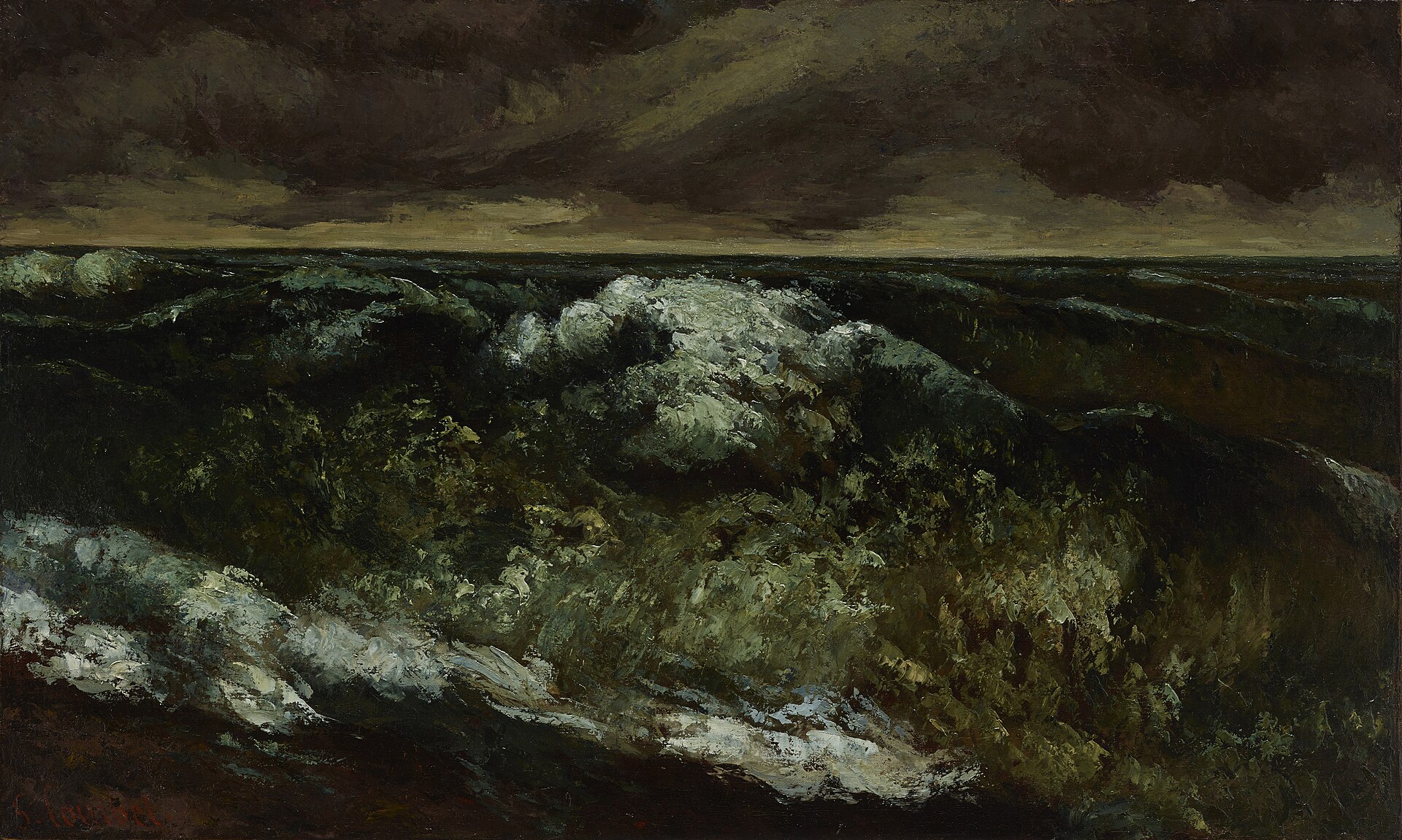
The Wave. Gustave Courbet, not stated on the file page. Dallas Museum of Art. Public domain.