
Psalms 93:4
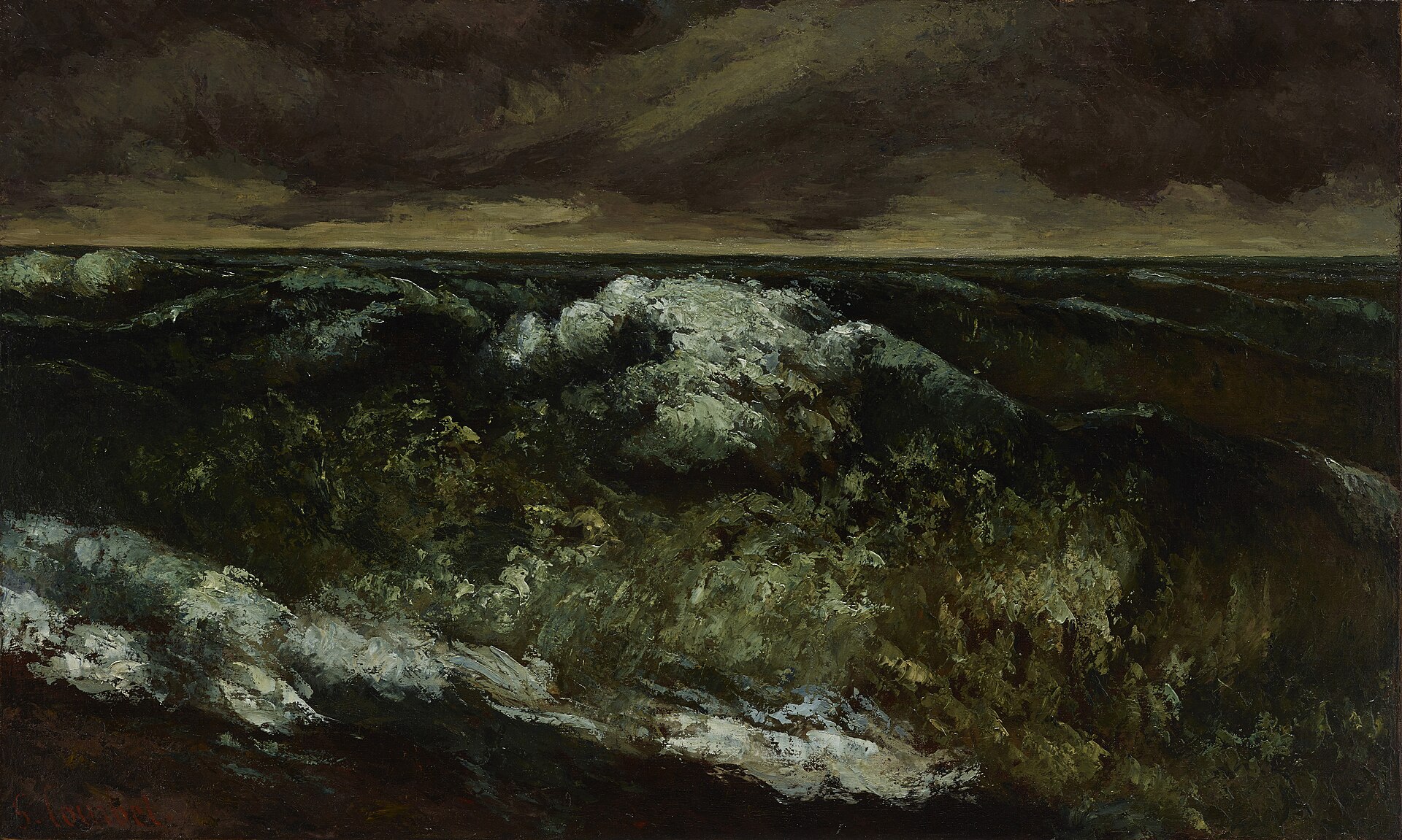
in Psalms 93Above the roar of many waters— the mighty breakers of the sea— the LORD on high is majestic.
BSB
The same verse in ASV and KJV ▾
ASV
Above the voices of many waters, The mighty breakers of the sea, Jehovah on high is mighty.
KJV
The Lord on high is mightier than the noise of many waters, yea, than the mighty waves of the sea.
⋯
This verse in Psalms 93
Commentary
12 notes on this verseThe floods have lifted up, O Lord, they have lifted up their voices; from the voices of many waters, wonderful are the surgings of the sea. As many words, so many meanings: as many little verses, so many sacraments. The floods have lifted up their voices. This is what is said in another place: 'The rush of the river maketh glad the city of God.' And in another place: 'The rivers shall clap their hands together.' The floods seem to me to be those which water the whole world, the apostolic and prophetic dignities.
This site's exposition
The floodwaters have risen
on Psalms 93:3-4
One Hebrew word, neharot, stands behind floodwaters, rivers and seas, and the verb for lifting up comes three times with it. The noise rises through the whole verse. Verse 4 sets the LORD on high above the roar of many waters and the breakers of the sea.
This site's exposition
Above the roar of many waters
Verse 4 answers the three risings of verse 3 with one word, majestic. The LORD is set on high, above the noise as well as the water. The flood stays below Him.
The record, by era
The Church Fathers1 voice
"The floods lift up their voices" [Psalm 93:3]. What are these floods, which have lift up their voices? We heard them not: neither when our Lord was born, did we hear rivers speak, nor when He was baptized, nor when He suffered; we heard not that rivers did speak. Read the Gospel, you find not that rivers spoke. It is not enough that they spoke: "They have lift up their voice:" they have not only spoken, but bravely, mightily, in a lofty voice. What are those rivers which have spoken?...The Spirit itself was a mighty river, whence many rivers were filled. Of that river the Psalmist says in another passage, "The rivers of the flood thereof shall make glad the city of God." Rivers then were made to flow from the belly of the disciples, when they received the Holy Spirit: themselves were rivers, when they had received that Holy Spirit. Whence did those rivers lift their voices? Wherefore did they lift them up? Because at first they feared. Peter was not yet a river, when at the question of the maid-servant he thrice denied Christ: "I do not know the man." [Matthew 26:69-74] Here he lies through fear: he lifts not his voice as yet: he is not yet the river. But when they were filled with the Holy Spirit, the Jews sent for them, and enjoined them not to preach at all, nor to teach in the name of Jesus....For when the Apostles had been dismissed from the council of the Jews, they came to their own friends, and told them what the priests and elders said unto them: but they on hearing lifted up their voices with one accord unto the Lord, and said, "Lord, it is You who has made heaven and earth, and the sea, and all that in them is;" [Acts 4:24] and the rest which floods lifting up their voices might say, "Wonderful are the hangings of the sea" [Psalm 93:4]. […]
The Medieval Church1 voice
A commentator
BonaventureCollations on the Hexaemeron, Collation 13 · Written in the 13th century.
proposed
The spiritual meanings are called rivers — and also those men who understand in a spiritual manner — because they have their origin from the Scriptures and are confirmed by the Scriptures, and because, from these spiritual meanings, other meanings are derived. Hence in the …
The Puritans and the Awakening3 voices
11 ), and the floods of ungodly men make the saints afraid, Ps. xviii. We may apply it to the tumults that are sometimes in our own bosoms, through prevailing passions and frights, which put the soul into disorder, and are ready to overthrow its graces and comforts; but, if the Lord reign there, even the winds and seas shall obey him.
quarantine:debris (2026-07-29) — leading-citation-number+unbalanced-parens
): The Lord himself is mightier. Let this keep our minds fixed, (1.) That God is on high, above them, which denotes his safety (they cannot reach him, Ps. xxix.
quarantine:debris (2026-07-29) — leading-punctuation
The Lord on high is mightier than the noise of many waters,....
4 more voices on this verse
The Nineteenth Century4 voices
The Lord on high is mightier than the noise of many waters. The utmost of their power is to him but a sound and he can readily master it, therefore he calls it a noise by way of contempt. When men combine to overthrow the kingdom of Jesus, plot secretly, and by and by rage openly, the Lord thinks no more of it than of so much noise upon the sea beach. Jehovah, the self existent and omnipotent, cares not for the opposition of dying men, however many or mighty they may be.
The Lord on high is mightier than the noise of many waters. The utmost of their power is to him but a sound and he can readily master it, therefore he calls it a noise by way of contempt. When men combine to overthrow the kingdom of Jesus, plot secretly, and by and by rage openly, the Lord thinks no more of it than of so much noise upon the sea beach. Jehovah, the self existent and omnipotent, cares not for the opposition of dying men, however many or mighty they may be. Yea, than the mighty waves of the sea. When the storm raises Atlantic billows, and drives them on with terrific force, the Lord is still able to restrain them, and so also when impious men are haughty and full of rage the Lord is able to subdue them and overrule their malice. Kings or mobs, emperors or savages, all are in the Lord's hands, and he can forbid their touching a hair of the heads of his saints.
The Lord - is mightier than the noise of many waters - Greater in strength than all the peoples and nations that can rise up against him. Mighty waves of the sea - Even the most powerful empires can prevail nothing against him; therefore those who trust in him have nothing to fear.
A commentator
Albert Barnes1798–1870
Notes, Explanatory and Practical, on the Old and New Testaments (1832-1869)
proposed
The Lord on high is mightier than the noise of many waters - That is, he is more powerful than those waters; he is able to control them. See Psa 65:7, note; Job 38:11, note. The original here is more rapid in the course of the thought; more emphatic and forcible: “More than the voice of waters - many - mighty - the breakers of the sea - in the high place is Jehovah.” He is over all those billows and breakers; more mighty than they all. They can proceed no further than he permits; they will be stayed when and where he commands. We can conceive of few things which more illustrate the power and the majesty of God than the fact that he thus presides over, and controls, the waves of the ocean. Yea, than the mighty waves of the sea - The original word here corresponds precisely with our word “breakers” - the mighty waves that “break” on the beach.
How the passage was read
What the Jewish commentators add
More than the voices of great waters, etc. I know that more than the voices of great waters, which roar over us, and more than the mightiest breakers of this sea, You are mighty, O Lord, and Your hand is powerful over them.
2 more on this passage, in their own words ▾
The rivers have raised, O Lord This is an expression of a cry and a plaint: Woe, O Lord, behold!
Your testimonies which Your prophets prophesied and promised concerning Your house, which is the dwelling of holiness.
This section is reception history: how the passage was read and kept in the Jewish tradition. Where a reading parts from an essential of the Christian faith, the section says so at that point.
Texts and citation data: Sefaria; each excerpt follows its version’s licence. 4 further sources are cited on this chapter that carry no English text this site may quote or only restate the verse.
The words behind it
9 Hebrew wordsEvery Hebrew word of this verse in the order it stands, with what it means and the door to its own study. The last column counts the times a word stands in the whole Bible: the rarer the word, the more the places it appears belong together.
| Hebrew | Sound | Meaning | Word study | In the Bible |
|---|---|---|---|---|
| מִקֹּל֨וֹת׀ | mikolot | more than [the] sounds of | H6963 → | 506 times |
| מַ֤יִם | mayim | waters | H4325 → | 581 times |
| רַבִּ֗ים | rabim | many | H7227 → | 454 times |
| אַדִּירִ֣ים | ʾadirim | majestic | H117 → | 27 times |
| מִשְׁבְּרֵי־ | mishberei- | [the] breakers of | H4867 → | 5 times |
| יָ֑ם | yam | [the] sea | H3220 → | 396 times |
| אַדִּ֖יר | ʾadir | [is] majestic | H117 → | 27 times |
| בַּמָּר֣וֹם | bamarom | in the height[s] | H4791 → | 54 times |
| יְהוָֽה׃ | yahweh | Yahweh | H3068 → | 6520 times |
מִקֹּל֨וֹת׀more than [the] sounds of
mikolotH6963 →506 times
מַ֤יִםwaters
mayimH4325 →581 times
רַבִּ֗יםmany
rabimH7227 →454 times
אַדִּירִ֣יםmajestic
ʾadirimH117 →27 times
מִשְׁבְּרֵי־[the] breakers of
mishberei-H4867 →5 times
יָ֑ם[the] sea
yamH3220 →396 times
אַדִּ֖יר[is] majestic
ʾadirH117 →27 times
בַּמָּר֣וֹםin the height[s]
bamaromH4791 →54 times
יְהוָֽה׃Yahweh
yahwehH3068 →6520 times
A shaded row is a word that stands 400 times or fewer in the Bible.
The walk
8 stopsEach card is a verse this one points to, and under it the verses that one points to in turn. Where several paths arrive at the same place, that place is listed first: the text keeps returning to it.
Through
Psalms 89:9You rule the raging sea; when its waves mount up, You still them.
it leads to
- Psalms 65:7
You stilled the roaring of the seas, the pounding of their waves, and the tumult of the nations.
- Psalms 107:25–29
For He spoke and raised a tempest that lifted the waves of the sea.
- Mark 4:41
Overwhelmed with fear, they asked one another, “Who is this, that even the wind and the sea obey Him?”
- Matthew 8:24–27
Suddenly a violent storm came up on the sea, so that the boat was engulfed by the waves; but Jesus was sleeping.
- Mark 4:39
Then Jesus got up and rebuked the wind and the sea. “Silence!” He commanded. “Be still!” And the wind died down, and it was perfectly calm.
- Psalms 65:7
Through
Job 38:11and I declared: ‘You may come this far, but no farther; here your proud waves must stop’?
it leads to
- Psalms 89:9
You rule the raging sea; when its waves mount up, You still them.
Reached by 2 separate paths from here.
- Proverbs 8:29
when He set a boundary for the sea, so that the waters would not surpass His command, when He marked out the foundations of the earth.
- Mark 4:39–41
Then Jesus got up and rebuked the wind and the sea. “Silence!” He commanded. “Be still!” And the wind died down, and it was perfectly calm.
- Psalms 89:9
Where this verse is studied
On this page
Studies1
About Psalms
This page draws on 11 works. Open the list of works
This page draws on Adam Clarke, Commentary on the Bible; Albert Barnes, Notes on the Book of Psalms; Albert Barnes, Notes, Explanatory and Practical, on the Old and New Testaments (1832-1869); Augustine of Hippo, Exposition on Psalm 93; Bonaventure, Collations on the Hexaemeron, Collation 13; Charles Spurgeon, The Treasury of David; Charles Spurgeon, The Treasury of David, Vol. 4; Franz Delitzsch, Biblical Commentary on the Psalms; Jerome, Homily 70, on Psalm 92 (Alternate Series); John Gill, Exposition of the Old Testament (1748-1763) and Matthew Henry, Commentary on the Whole Bible.