
Psalms 147:17
in Psalms 147He casts forth His hail like pebbles. Who can withstand His icy blast?
BSB
The same verse in ASV and KJV ▾
ASV
He casteth forth his ice like morsels: Who can stand before his cold?
KJV
He casteth forth his ice like morsels: who can stand before his cold?
⋯
This verse in Psalms 147
Commentary
12 notes on this verseHe sends his crystal like morsels. As his loaves are broken and become morsels, so too this crystal is broken and turned into morsels. Crystal has this nature: it forms whenever waters are frozen — what we call ice. Between crystal and water, then, there is the same difference as between water and ice: for water is poured out, as it were, very broadly, whereas crystal is, as it were, compacted into itself, and reduced into one form. Whenever water freezes, it makes crystal.
This site's exposition
He sends forth His command
on Psalms 147:15-18
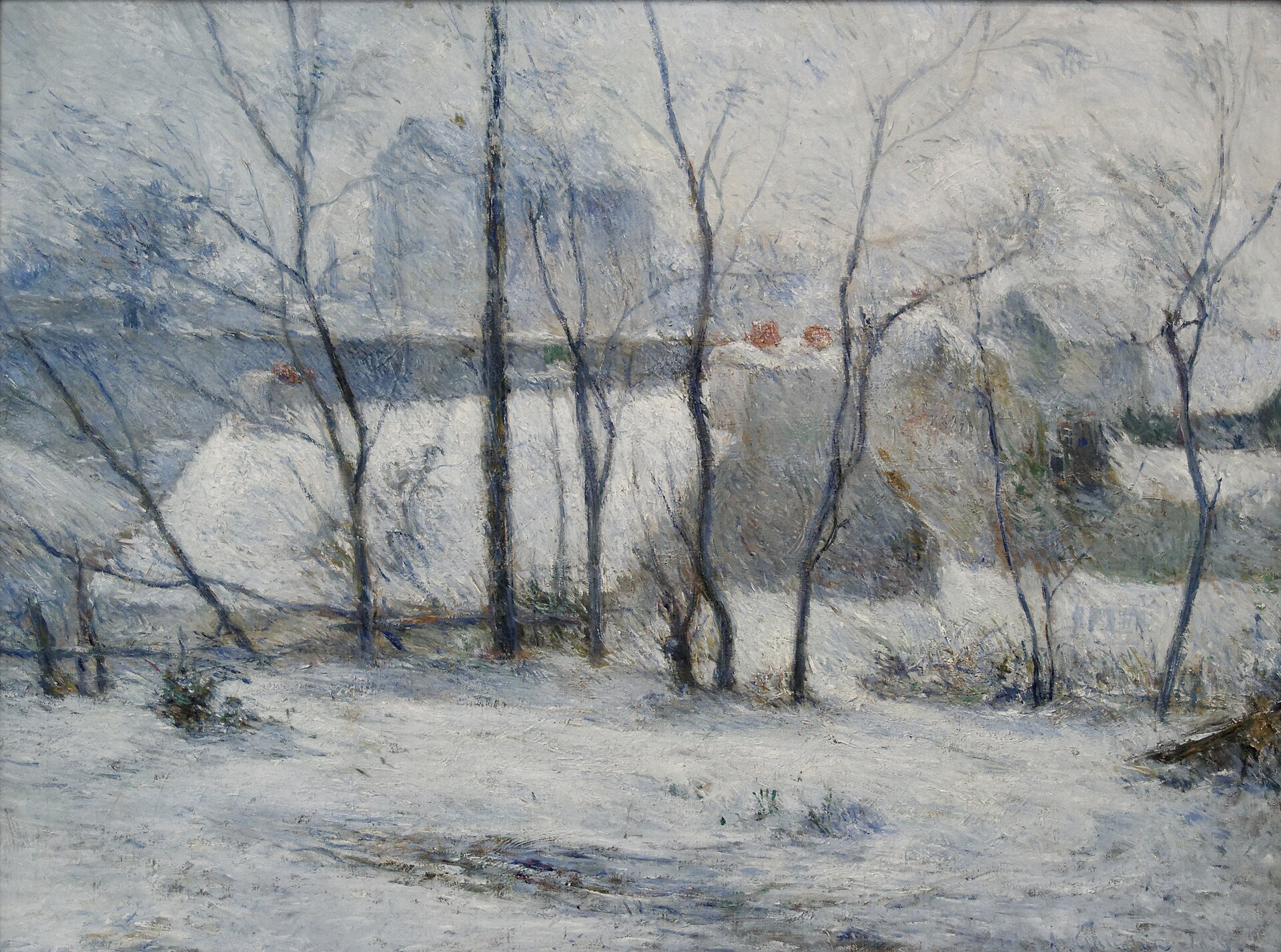
The command runs to the earth and the word runs swiftly, and the winter follows it: snow like wool, frost scattered like ashes, hail thrown down like pebbles. The same word melts them again and the waters flow. Charles Spurgeon reads the thaw as the word doing the whole work, the hardest ice dissolved at once.
The record, by era
The Church Fathers1 voice
"Who sends His crystal like morsels of bread" [Psalm 147:17]. We need not spend our toil again in saying what crystal is. We have already said it, and I do not think that you, beloved, have forgotten it. What is then, "He sends His crystal like morsels of bread"? What is "crystal"? It is very hard, it is very tightly congealed; it can not, like snow, be easily melted. Snow, hardened by many years' duration, and by the succession of ages, is called "crystal," and this "He sends like morsels of bread." What means this? They were too hard, no longer fit to be compared to snow, but to crystal; but they too are predestinated and called, and some of them even so as to feed others, to be useful to others also. And what need is there to enumerate many, whom we happen to know, this one and that one? Every one when he thinks can recall to mind how hardened and obstinate some of those whom he knows have been, how they have struggled against the truth; yet now they preach the truth, they have been made morsels of bread. Who is that one Bread? "We being many," says the Apostle, "are one Body in Christ;" [Romans 12:5] he says also, "we being many are one Bread and one Body." [1 Corinthians 10:17] If then the whole Body of Christ is one Bread, the members of Christ are morsels of Bread. Of some that are hard He makes members of Himself, and useful for feeding others....Behold, the Apostle Paul was a crystal, hard, resisting the truth, crying out against the Gospel, hardening himself, as it were, against the sun....Since then he was crystal, he appeared clear and white, but he was hard and very cold. How was he bright and white? "An Hebrew of the Hebrews; as touching the law, a Pharisee." Behold the brightness of crystal. Now hear the hardness of crystal. "As touching zeal, persecuting the Church" [Philippians 3:5-6] of Christ. […]
The Puritans and the Awakening1 voice
He casteth forth his ice like morsels,.... Divided like morsels, as the Targum; cut into pieces, like morsels of bread. This seems to have respect to hail stones, which sometimes fall like pieces of ice, and are very prejudicial to the fruits of the earth: this was one of the ten plagues of Egypt; and whereby also many of the Canaanites were destroyed in the times of Joshua, Exo 9:23; and there is an exceeding great storm of hail yet to come, very dreadful; see Rev 16:
The Nineteenth Century3 voices
He casteth forth his ice like morsels. Such are the crumbs of hail which he casts forth, or the crusts of ice which he creates upon the waters. These morsels are his ice, and he casts them abroad. The two expressions indicate a very real presence of God in the phenomena of nature. Who can stand before his cold? None can resist the utmost rigours of cold any more than they can bear the vehemence of heat. God's withdrawals of light are a darkness that may be felt, and his withdrawals of heat are a cold which is absolutely omnipotent.
A commentator
Jamieson, Fausset & Brown1802–1910
Commentary Critical and Explanatory on the Whole Bible (1871)
God's Word, as a swift messenger, executes His purpose, for with Him to command is to perform (Ge 1:3; Ps 33:9), and He brings about the wonders of providence as easily as men cast crumbs.
A commentator
Jamieson, Fausset & Brown1802–1910
Commentary Critical and Explanatory on the Whole Bible (1871)
proposed
morsels--used as to food (Ge 18:5), perhaps here denotes hail. This mighty ruler and benefactor of heaven and earth is such especially to His chosen people, to whom alone (De 4:32-34) He has made known His will, while others have been left in darkness.
quarantine:debris (2026-07-29) — starts-lowercase
5 more voices on this verse
The Nineteenth Century5 voices
He casteth forth his ice like morsels. Such are the crumbs of hail which he casts forth, or the crusts of ice which he creates upon the waters. These morsels are his ice, and he casts them abroad. The two expressions indicate a very real presence of God in the phenomena of nature. Who can stand before his cold? None can resist the utmost rigours of cold any more than they can bear the vehemence of heat. God's withdrawals of light are a darkness that may be felt, and his withdrawals of heat are a cold which is absolutely omnipotent. If the Lord, instead of revealing himself as a fire, should adopt the opposite manifestation of cold, he would, in either case, consume us should he put forth all his power. It is ours to submit to deprivations with patience, seeing the cold is his cold. That which God sends, whether it be heat or cold, no man can defy with impunity, but he is happy who bows before it with childlike submission. When we cannot stand before God we will gladly lie at his feet, or nestle under his wings.
LOOKING out of our window one morning we saw the earth robed in a white mantle—in a few short hours the earth had been covered to a considerable depth with snow. We looked out again in a few hours and saw the fields as green as ever and the plowed fields as bare as if no single flake had fallen! It is no uncommon thing for a heavy fall of snow to be followed by a rapid thaw. These interesting changes are worked by God, not only with a purpose toward the outward world, but with some design toward the spiritual realm. God is always a teacher. In every action that He performs He is instructing His own children and opening up to them the road to inner mysteries. Happy are those who find food for their Heaven-born spirits, as well as for their mental powers in the works of the Lord's hand. I shall ask your attention, first, to the operations of nature spoken of in the text. And, secondly, to those operations of Divine Grace of which they are the most fitting symbols. I. Consider first, THE OPERATIONS OF NATURE. We shall not think a few minutes wasted if we call your attention to the hand of God in frost and thaw, even upon natural grounds. 1. Observe the directness of the Lord's work. I rejoice as I read these words, to find how present our God is in the world. It is not written, "the laws of nature produce snow," but, "HE gives snow," as if every flake came directly from the palm of His hand. We are not told that certain natural regulations form moisture into frost—no, but as Moses took ashes of the furnace and scattered them upon Egypt, so it is said of the Lord, "HE scatters the frost like ashes." It is not said that the Eternal has set the world going, and by the operation of its machinery ice is produced.
LOOKING out of our window one morning we saw the earth robed in a white mantle—in a few short hours the earth had been covered to a considerable depth with snow. We looked out again in a few hours and saw the fields as green as ever and the plowed fields as bare as if no single flake had fallen! It is no uncommon thing for a heavy fall of snow to be followed by a rapid thaw.
He casteth forth his ice - קרחו korcho, (probably hailstones), like crumbs. Who can stand before his cold? - At particular times the cold in the east is so very intense as to kill man and beast. Jacobus de Vitriaco, one of the writers in the Gesta Dei per Francos, says, that in an expedition in which he was engaged against Mount Tabor, on the 24th of December, the cold was so intense that many of the poor people, and the beasts of burden, died by it. And Albertus Aquensis, another of these writers, speaking of the cold in Judea, says, that thirty of the people who attended Baldwin 1: in the mountainous districts near the Dead Sea, were killed by it; and that in that expedition they had to contend with horrible hail and ice, with unheard-of snow and rain. From thls we find that the winters are often very severe in Judea; and in such cases as the above, we may well call out, “Who can stand against his cold!”
A commentator
Albert Barnes1798–1870
Notes, Explanatory and Practical, on the Old and New Testaments (1832-1869)
proposed
He casteth forth his ice like morsels - The word rendered morsels means properly a bit, a crumb, as of bread, Gen 18:5; Jdg 19:5. The allusion here would seem to be to hail, which God sends upon the earth as easily as one scatters crumbs of bread from the hand. Who can stand before his cold? - Or, hail. The word is the same, except in pointing, as the preceding word rendered ice. The idea is that no one can stand before the peltings of the hail, when God sends it forth, or scatters it upon the earth.
The words behind it
7 Hebrew wordsEvery Hebrew word of this verse in the order it stands, with what it means and the door to its own study. The last column counts the times a word stands in the whole Bible: the rarer the word, the more the places it appears belong together.
| Hebrew | Sound | Meaning | Word study | In the Bible |
|---|---|---|---|---|
| מַשְׁלִ֣יךְ | mashlikh | [the one who] throws | H7993 → | 125 times |
| קַֽרְח֣וֹ | karcho | ice his | H7140 → | |
| כְפִתִּ֑ים | khefitim | like crumbs | H6595 → | |
| לִפְנֵ֥י | lifnei | <to> before | H6440 → | 2123 times |
| קָ֝רָת֗וֹ | karato | coldness his | H7135 → | |
| מִ֣י | mi | who? | H4310 → | 423 times |
| יַעֲמֹֽד׃ | yaamod | will he stand | H5975 → | 521 times |
מַשְׁלִ֣יךְ[the one who] throws
mashlikhH7993 →125 times
קַֽרְח֣וֹice his
karchoH7140 →
כְפִתִּ֑יםlike crumbs
khefitimH6595 →
לִפְנֵ֥י<to> before
lifneiH6440 →2123 times
קָ֝רָת֗וֹcoldness his
karatoH7135 →
מִ֣יwho?
miH4310 →423 times
יַעֲמֹֽד׃will he stand
yaamodH5975 →521 times
A shaded row is a word that stands 400 times or fewer in the Bible.
Where this verse is studied
About Psalms
This page draws on 10 works. Open the list of works
This page draws on Adam Clarke, Commentary on the Bible; Albert Barnes, Notes, Explanatory and Practical, on the Old and New Testaments (1832-1869); Augustine of Hippo, Exposition on Psalm 147; Charles Spurgeon, The Treasury of David; Charles Spurgeon, The Treasury of David, Vol. 7; Charles Spurgeon, The Metropolitan Tabernacle Pulpit, Sermon No. 670: “Frost And Thaw” (lightly modernized text, CCEL edition); Franz Delitzsch, Biblical Commentary on the Psalms; Jamieson, Fausset & Brown, Commentary Critical and Explanatory on the Whole Bible; Jerome, Homily 57, on Psalm 147 and John Gill, Exposition of the Old Testament (1748-1763).