
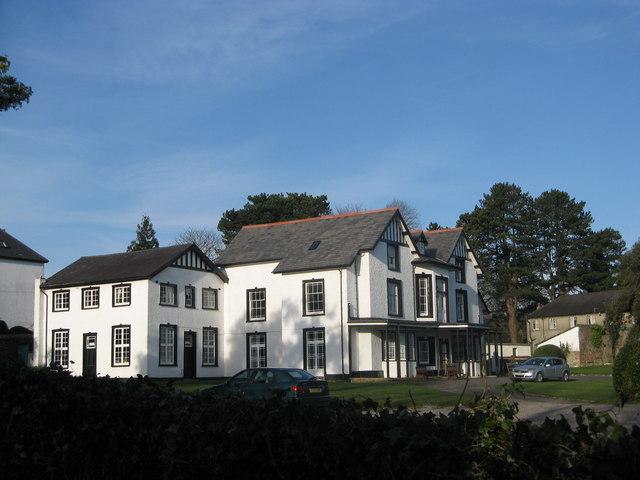
The Bible College of Wales, Robert Cuthill, 2009. CC BY-SA 2.0.
Wales, Pennsylvania and southern Africa, 1879 to 1950 · Person · Featured Study
Rees Howells
He was a Welsh tin-mill worker who became a missionary in southern Africa and founded the Bible College of Wales at Swansea.
- Born
- 10 October 1879
- Died
- February 1950
- Family
- Father: Thomas Howells; Mother: Margaret Howells; Wife: Elizabeth Hannah Jones, married 21 December 1910; Son: Samuel Howells, his only son
- Places
- Brynamman, New Castle, Pennsylvania, Connellsville, Rusitu, Swansea
In a Pennsylvania town a young Welshman heard a converted Jew preach, and said he had never seen Calvary before that night.
I searched for a man among them to repair the wall and stand in the gap before Me on behalf of the land, so that I should not destroy it. But I found no one.
Summary
Rees Howells was born in Wales in 1879, the sixth of eleven children. He came to faith in America. He and his wife Elizabeth served a mission in Africa, and in 1924 he opened his college. He died in 1950.
- Most of what is known of him comes from one book, the life Norman Grubb wrote.
- Before the war he said in the press that prayer could stop it.
- Roy Hession later doubted a vision the college held about the world.
The Texts of the Intercessor
Two prophets tell of God's search for one to stand between Him and the people.
Norman Grubb called him an intercessor, one who prays for others before God. The question of this life is how a Welsh mill hand came to lead a college of prayer.
He saw that there was no man; He was amazed that there was no one to intercede. So His own arm brought salvation, and His own righteousness sustained Him.Isaiah tells of the same lack in his own day and names it with the verb intercede.
The Life in Order
The dates stand on Grubb's book, with J. Edwin Orr for Africa and Doris Ruscoe for his death.
The college opened when he was forty-four.
- 10 October 1879BirthGrubb, chapter 1
- Aged twelveTin millGrubb
- Aged twenty-twoTo PennsylvaniaGrubb, page 18 of the 1979 printing
- In AmericaConversionGrubb, page 25
- 21 December 1910MarriageGrubb, chapter 22
- 10 July 1915To RusituGrubb
- 10 October 1915Revival at RusituOrr, The Flaming Tongue
- Whit-Monday 1924The college openedGrubb
- December 1939A pamphletGrubb
- February 1950DeathRuscoe (1983)
Each step of the life stands with its witness.
10 October 1915, Whit-Monday 1924, December 1939, February 1950
From the Tin Mill to Derwen Fawr
A boy of the valley went to the steel towns of Pennsylvania, to an African mission and back to Wales.
He was born in 1879 in the mining village of Brynamman, where Thomas and Margaret Howells raised three girls and eight boys. He left school at twelve and spent the next ten years in the tin mill.
At twenty-two he crossed to America, to a cousin who worked at New Castle in the steel country round Pittsburgh. He moved on to Connellsville, and there he heard Maurice Reuben, a converted Jew from Pittsburgh, and came to faith.
He married Elizabeth Hannah Jones, also of Brynamman, in 1910. The South Africa General Mission sent them to its station at Rusitu, in Gazaland, and they left England in July 1915. The historian J. Edwin Orr dates an awakening at Rusitu from 10 October that year.
Back in Wales he opened the Bible College of Wales at Swansea in 1924. Grubb names three houses bought for it in turn: Glynderwen for £6,300, then Derwen Fawr, then Sketty Isaf for £3,000. He died in February 1950.
In Their Own Words
Three of his sayings as Grubb prints them: his conversion, a word from the war years and a forecast the newspaper printed.
Rees Howells (1879 to 1950)
Norman P. Grubb, Rees Howells, Intercessor (Christian Literature Crusade, 1971 printing), page 25
Calvary at Connellsville
“I had never seen Calvary before that night.”
Welsh revival
About this saying1 paragraph
Grubb prints in 1952 what he said of the night at Connellsville when he heard Maurice Reuben.
Rees Howells
Norman P. Grubb, Rees Howells, Intercessor (Philadelphia: Christian Literature Crusade, 1952), page 242, the chapter Intercession for Dunkirk
A death in every grade
“I preached victory yesterday without a visible victory. There is a death in every grade, but as really as you die, there will be fruit to a hundred-fold.”
Welsh revival
About this saying1 paragraph
He spoke these words to the college in the war years, and Grubb prints them in 1952 in the chapter he calls Intercession for Dunkirk.
Rees Howells
Norman P. Grubb, Rees Howells, Intercessor (Christian Literature Crusade, 1971 printing), reprinting a newspaper report, page 248, the chapter Intercession for Dunkirk
Effectual prayer
“If all the righteous in the country will send up effectual prayer, we feel sure that we shall prevail”
Welsh revival
About this saying1 paragraph
Before the war of 1939 a newspaper quoted him under the headline "Welsh Bible College Director Urges Prayer to Stop War", and Grubb reprints the words.
The People Around Him
The witnesses name his family, the preacher of his conversion, his biographer and a critic.
His wife went with him to Africa.
| Person | Tie to Howells | The witness |
|---|---|---|
| Thomas and Margaret Howells | His parents, of Brynamman | Grubb, chapter 1 |
| Evan Lewis | The cousin at New Castle, Pennsylvania, he went to join | Grubb |
| Maurice Reuben | The preacher of his conversion | Grubb |
| Elizabeth Hannah Jones | His wife, with him at Rusitu | Grubb, chapter 22 |
| Samuel Howells | His only son | Grubb, the preface of 1952 |
| Norman P. Grubb | His biographer | Grubb, the preface |
| Roy Hession | Wrote against one of the college's visions | Hession, My Calvary Road |
The Places of His Life
His life ran from a Welsh valley to Pennsylvania and southern Africa, and ended at Swansea.
The college at Swansea held him for his last twenty-six years.
| Place | What the witnesses say | The witness |
|---|---|---|
| Brynamman | The mining village of his birth, on the Llandilo Road | Grubb, chapter 1 |
| New Castle, Pennsylvania | His cousin's steel town | Grubb |
| Connellsville, Pennsylvania | The town of his conversion | Grubb |
| Rusitu, Gazaland | The mission station he and his wife served from 1915 | Grubb, chapter 24; Orr |
| Lutubeni, Tembuland | A station he visited after Rusitu | Orr, The Flaming Tongue |
| Swansea | Where he led the college from 1924 | Grubb; Ruscoe |
Prayer for the War
Grubb tells the war years as a work of prayer.
In December 1939 he published a pamphlet called God Challenges the Dictators, which Grubb quotes.
Grubb gives chapters to Dunkirk and the Battle of Britain, and he tells each as a contest of prayer.
How the Key Verse Was Taught
A Victorian commentary and a teacher of prayer today read God's search for one to stand in the gap.
Jamieson, Fausset & Brown (1802 to 1910)
Commentary Critical and Explanatory on the Whole Bible
Jamieson, Fausset and Brown found none of the godly then willing to stand between God and the people.
“None now, of the godly, knowing the desperate state of the people, and God's purpose as to them, was willing longer to interpose between God's wrath and them. And none ‘among them,’ that is, among those just enumerated as guilty of such sins”
on Ezekiel 22:30Reformed
The rest2 more paragraphs
(Eze 22:25-29),
was morally able for such an office.
Dutch Sheets (born 1954)
Give Him 15 daily devotional, "The Land is Being Healed" (October 21, 2025)
Dutch Sheets, who teaches intercession today, ties the judgment of the chapter to the missing intercessor.
“In these sobering verses from Ezekiel, God was unable to find anyone to release the necessary intercession and, tragically, had to send judgment.”
on Ezekiel 22:30 to 31Charismatic
What the Witnesses Leave Open
Readers differ on the forecast before the war, on a vision of the college and on the work he did as a young man.
The forecast that war could be stoppedNorman P. Grubb and those he reports
A newspaper before the war quoted him as sure that effectual prayer would prevail. Grubb records that when war came, people said the prediction was wrong, and that Howells thanked God he had made it.
The Every Creature VisionRoy Hession
Roy Hession records being told that God had revealed to Howells that He would complete the evangelization of the world in the next thirty years through the college. Hession concluded that the vision was "the hallucination of an over-eager mind", and he writes that after Howells died the college quietly dropped it.
Tin mill or coal mineNorman P. Grubb's chapter and his front matter
Grubb's first chapter puts the boy in the tin mill for ten years and gives the iron works and the coal mine to his father. The front matter of the 1967 printing says he worked in tin-mill and coal-mine.
Books to Read Next
Rees Howells, Intercessor
Norman P. Grubb · 1952
Grubb wrote it two years after his death.
In print: find it wherever books are sold.
The Intercession of Rees Howells
Doris M. Ruscoe · 1983
Ruscoe gives a later account of his prayer and of the college.
In print: find it wherever books are sold.
The Flaming Tongue
J. Edwin Orr · 1975
Orr tells of the revivals after 1900, among them the awakening at Rusitu.
In print: find it wherever books are sold.
What Howells Left
He left the Bible College of Wales at Swansea, which his son Samuel led after him.
Sources
Scripture is the Berean Standard Bible.
- The Holy Bible, Berean Standard Bible (read 2026)
- Norman P. Grubb, Rees Howells, Intercessor (Christian Literature Crusade: 1952 Philadelphia and Fort Washington printings; 1953; 1967; 1971; 1979), the printing named at each locator.
- Doris M. Ruscoe, The Intercession of Rees Howells (Guildford: Lutterworth Press; Fort Washington: Christian Literature Crusade, 1983)
- J. Edwin Orr, The Flaming Tongue: Evangelical Awakenings, 1900- (Chicago: Moody Press, 1975)
- Roy Hession, My Calvary Road (Winslow: Rickfords Hill Publishing, 2012)
- Jamieson, Fausset and Brown, Commentary Critical and Explanatory on the Whole Bible, on Ezekiel 22:30.
- Dutch Sheets, Give Him 15, The Land is Being Healed (21 October 2025), on Ezekiel 22:30.
Keep Studying
Studies1
Church history3