
Event
Babylonian Exile (586 BCE)
The Neo-Babylonian destruction of Jerusalem and the First Temple, and the resulting deportation of most of Judah's population — the central trauma of the Hebrew Bible.
Also called Fall of Jerusalem to Babylon · Destruction of the First Temple
Start here
The judgment God promised, and the mercy inside it
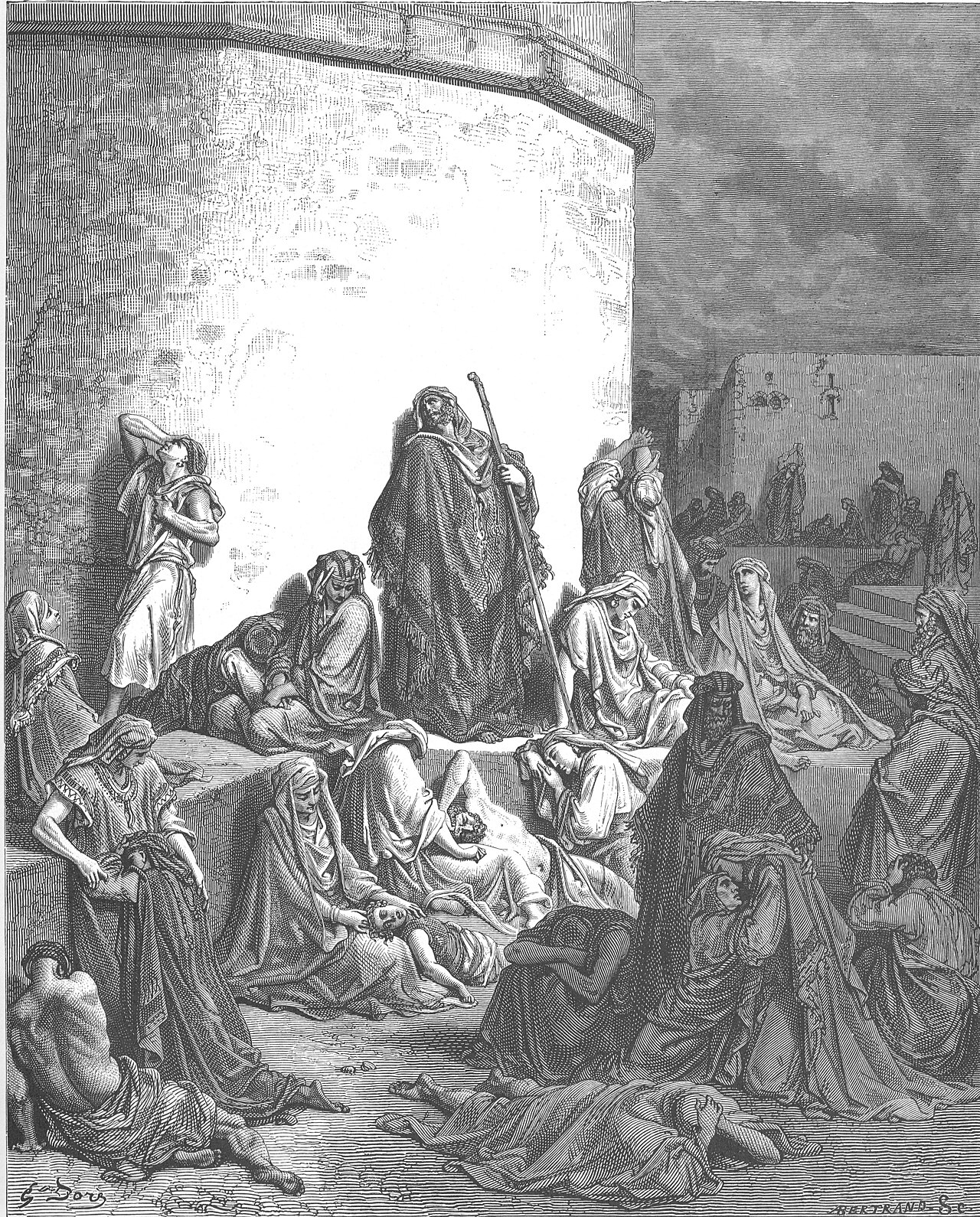
For centuries the prophets warned that breaking covenant would end in exile. In 586 BC the walls came down, the temple burned, and the warning came true to the letter.
Exile was judgment, not abandonment. God sent Jeremiah's letter ahead of the captives: build houses, plant gardens, pray for the city: I know the plans I have for you.
Seventy years, Jeremiah said. Daniel counted them in Babylon and began to pray, and Cyrus signed the decree to send the people home. The Bible's own clock kept exact time.
The record itself
Where it is written
On the seventh day of the fifth month, in the nineteenth year of Nebuchadnezzar’s reign over Babylon, Nebuzaradan captain of the guard, a servant of the king of Babylon, entered Jerusalem. He burned down the house of the LORD, the royal palace, and all the houses of Jerusalem—every significant building. And the whole army of the Chaldeans under the captain of the guard broke down the walls around Jerusalem. Then Nebuzaradan captain of the guard carried into exile the people who remained in the city, along with the deserters who had defected to the king of Babylon and the rest of the population.The day the temple burned, dated to the month.
For this is what the LORD says: “When Babylon’s seventy years are complete, I will attend to you and confirm My promise to restore you to this place. For I know the plans I have for you, declares the LORD, plans to prosper you and not to harm you, to give you a future and a hope.Seventy years, and the promise on the far side of them.
in the first year of his reign, I, Daniel, understood from the sacred books, according to the word of the LORD to Jeremiah the prophet, that the desolation of Jerusalem would last seventy years. So I turned my attention to the Lord God to seek Him by prayer and petition, with fasting, sackcloth, and ashes.A man in exile reads the prophecy, counts, and prays.
In the first year of Cyrus king of Persia, to fulfill the word of the LORD spoken through Jeremiah, the LORD stirred the spirit of Cyrus king of Persia to send a proclamation throughout his kingdom and to put it in writing as follows: “This is what Cyrus king of Persia says: ‘The LORD, the God of heaven, who has given me all the kingdoms of the earth, has appointed me to build a house for Him at Jerusalem in Judah. Whoever among you belongs to His people, may the LORD his God be with him, and may he go up.’”Cyrus issues the decree: the seventy years close on schedule.
The account in brief
What happened
The Babylonian Exile refers to the forced deportation of much of the population of the kingdom of Judah to Babylon by Nebuchadnezzar II.
Three successive waves are recorded: 605 BCE (including Daniel and his companions, per Daniel 1), 597 BCE (including Ezekiel and King Jehoiachin, per 2 Kings 24:10–16), and 586 BCE, when Jerusalem fell, the First Temple was destroyed, and most of the remaining population was taken into exile (2 Kings 25; Jeremiah 39, 52; 2 Chronicles 36). The 586 BCE event is the one most often meant when "the Exile" is referenced without qualification.
The exile ended formally with the decree of Cyrus the Great in 539/538 BCE permitting the return (Ezra 1; 2 Chronicles 36:22–23). The exile is the setting for Ezekiel and Daniel, much of the later prophetic material, Lamentations, and parts of the Psalms. It profoundly reshaped Israelite religion, catalyzing the rise of the synagogue and the finalization of much of the Hebrew canon.