
Psalms 37:14
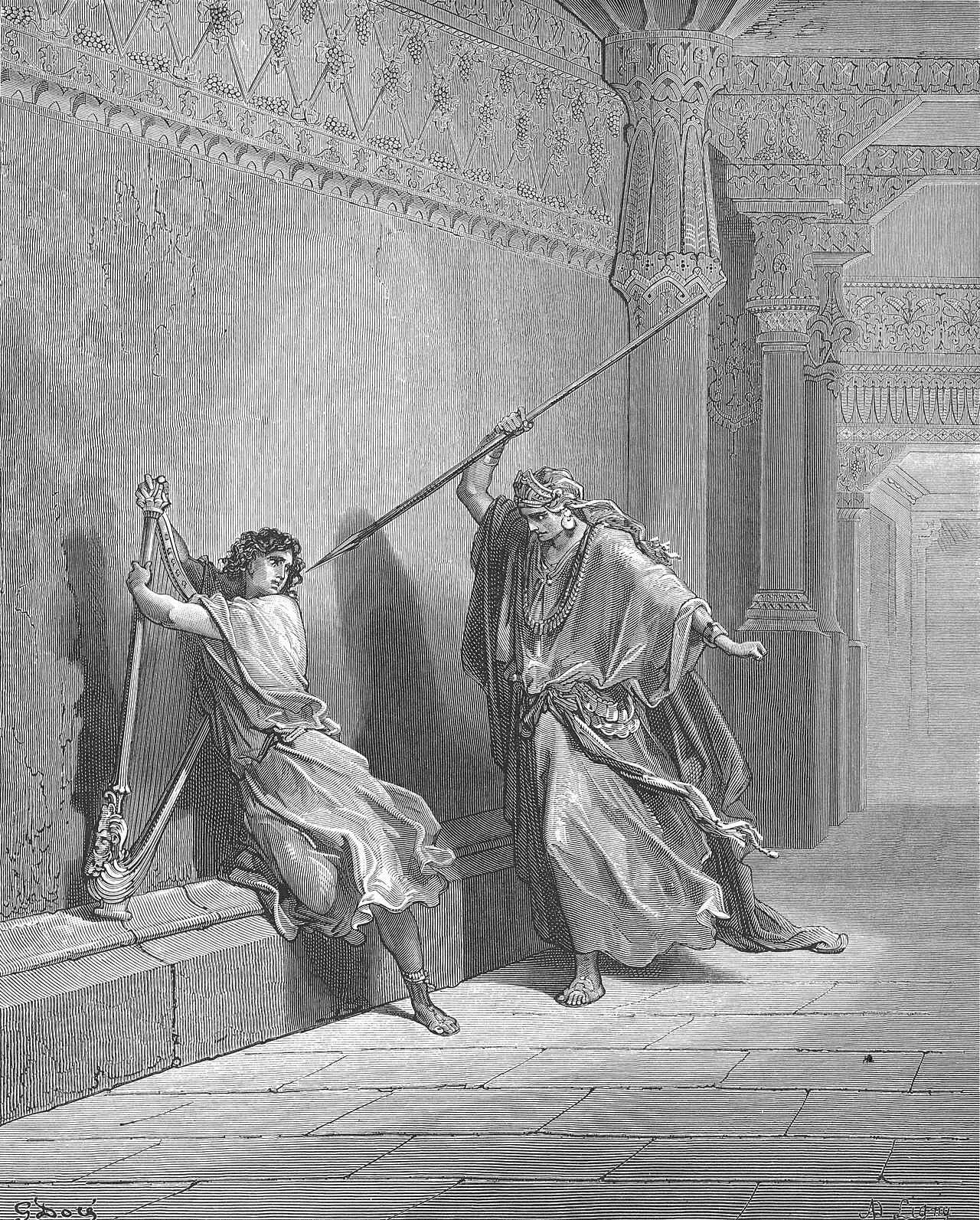
in Psalms 37The wicked have drawn the sword and bent the bow to bring down the poor and needy, to slay those whose ways are upright.
BSB
The same verse in ASV and KJV ▾
ASV
The wicked have drawn out the sword, and have bent their bow, To cast down the poor and needy, To slay such as are upright in the way.
KJV
The wicked have drawn out the sword, and have bent their bow, to cast down the poor and needy, and to slay such as be of upright conversation.
⋯
This verse in Psalms 37
Commentary
4 notes on this verse(Verse 14.) Moreover, he adds: Behold, they have unsheathed the sword, sinners have bent their bow, to cast down the needy and the destitute. What is the sword of the sinner, if not the opposite of the sword of the Holy Spirit? Scripture has taught me this sword; the Apostle taught it, saying that we have the breastplate of righteousness, and the shield of faith, and the helmet of salvation, and the sword of the Spirit, which is the word of God (Ephesians 6:14 et seq.). Therefore, the word of God is the sword of the Holy Spirit.
This site's exposition
scheme against the righteous
on Psalms 37:12-15
The scheming comes with gnashing teeth, and the drawn sword and bent bow are aimed at the poor and needy. The Lord laughs over them, the same laughter He gives the conspiring kings at Psalm 2:4, and He sees their day coming. Their own swords turn back into their hearts.
The record, by era
The Puritans and the Awakening1 voice
The wicked have drawn out the sword,.... That is, out of the scabbard; they drew upon the righteous, in order to sheath it in them; or they sharpened the sword, as Aben Ezra observes some interpret the word; it may be literally rendered, "opened the sword" (q), which before lay hid in the scabbard: and have bent their bow; having put the arrow in it, in order to shoot.
The Nineteenth Century1 voice
The wicked have drawn out the sword. They hold their weapon out of its sheath, and watch for a time to use it. And have bent their bow. One weapon is not enough, they carry another ready for action. They carry so strong a bow that they have trodden upon it to bend it—they will lose nothing for want of force or readiness. To cast down the poor and needy. These are their game, the objects of their accursed malice.
How the passage was read
What the Jewish commentators add
initiated war the wicked initiated quarrel and strife without previous provocation.
This section is reception history: how the passage was read and kept in the Jewish tradition. Where a reading parts from an essential of the Christian faith, the section says so at that point.
Texts and citation data: Sefaria; each excerpt follows its version’s licence. 5 further sources are cited on this chapter that carry no English text this site may quote or only restate the verse.
The words behind it
11 Hebrew wordsEvery Hebrew word of this verse in the order it stands, with what it means and the door to its own study. The last column counts the times a word stands in the whole Bible: the rarer the word, the more the places it appears belong together.
| Hebrew | Sound | Meaning | Word study | In the Bible |
|---|---|---|---|---|
| חֶ֤רֶב׀ | cherev | a sword | H2719 → | 413 times |
| פָּֽתְח֣וּ | patechu | they have drawn | H6605 → | 144 times |
| רְשָׁעִים֮ | reshaim | wicked [people] | H7563 → | 263 times |
| וְדָרְכ֪וּ | vedarekhu | and they have bent | H1869 → | 62 times |
| קַ֫שְׁתָּ֥ם | kashtam | bow their | H7198 → | 76 times |
| לְ֭הַפִּיל | lehapil | to make fall | H5307 → | 435 times |
| עָנִ֣י | ʾani | [the] poor | H6041 → | 73 times |
| וְאֶבְי֑וֹן | veevyon | and [the] needy | H34 → | 61 times |
| לִ֝טְב֗וֹחַ | litvoach | to slaughter | H2873 → | |
| יִשְׁרֵי־ | yishrei- | [people] upright of | H3477 → | 119 times |
| דָֽרֶךְ׃ | darekh | way | H1870 → | 707 times |
חֶ֤רֶב׀a sword
cherevH2719 →413 times
פָּֽתְח֣וּthey have drawn
patechuH6605 →144 times
רְשָׁעִים֮wicked [people]
reshaimH7563 →263 times
וְדָרְכ֪וּand they have bent
vedarekhuH1869 →62 times
קַ֫שְׁתָּ֥םbow their
kashtamH7198 →76 times
לְ֭הַפִּילto make fall
lehapilH5307 →435 times
עָנִ֣י[the] poor
ʾaniH6041 →73 times
וְאֶבְי֑וֹןand [the] needy
veevyonH34 →61 times
לִ֝טְב֗וֹחַto slaughter
litvoachH2873 →
יִשְׁרֵי־[people] upright of
yishrei-H3477 →119 times
דָֽרֶךְ׃way
darekhH1870 →707 times
A shaded row is a word that stands 400 times or fewer in the Bible.
The walk
8 stopsEach card is a verse this one points to, and under it the verses that one points to in turn. Where several paths arrive at the same place, that place is listed first: the text keeps returning to it.
Through
1 John 3:12Do not be like Cain, who belonged to the evil one and murdered his brother. And why did Cain slay him? Because his own deeds were evil, while those of his brother were righteous.
it leads to
- Hebrews 11:4
By faith Abel offered God a better sacrifice than Cain did. By faith he was commended as righteous when God gave approval to his gifts. And by faith he still speaks, even though he…
- Genesis 4:4–15
while Abel brought the best portions of the firstborn of his flock. And the LORD looked with favor on Abel and his offering,
- Proverbs 29:27
An unjust man is detestable to the righteous, and one whose way is upright is detestable to the wicked.
- Hebrews 11:4
Through
Acts 12:11Then Peter came to himself and said, “Now I know for sure that the Lord has sent His angel and rescued me from Herod’s grasp and from everything the Jewish people were anticipating.”
it leads to
- Daniel 6:22
My God sent His angel and shut the mouths of the lions. They have not hurt me, for I was found innocent in His sight, and I have done no wrong against you, O…
- Daniel 3:28
Nebuchadnezzar declared, “Blessed be the God of Shadrach, Meshach, and Abednego, who has sent His angel and delivered His servants who trusted in Him. They violated the king’s command and risked their lives rather…
- 2 Peter 2:9
if all this is so, then the Lord knows how to rescue the godly from trials and to hold the unrighteous for punishment on the day of judgment.
- Psalms 34:7
The angel of the LORD encamps around those who fear Him, and he delivers them.
- Daniel 6:22
Through
Proverbs 29:27An unjust man is detestable to the righteous, and one whose way is upright is detestable to the wicked.
it leads to
- 1 John 3:13
So do not be surprised, brothers, if the world hates you.
- 1 John 3:13
Where this verse is studied
On this page
About Psalms
This page draws on Ambrose of Milan, Commentaries on the Twelve Davidic Psalms; Charles Spurgeon, The Treasury of David; Charles Spurgeon, The Treasury of David, Vol. 2; Franz Delitzsch, Biblical Commentary on the Psalms and John Gill, Exposition of the Old Testament (1748-1763).